



Fierce Deity armor in Tears of the Kingdom
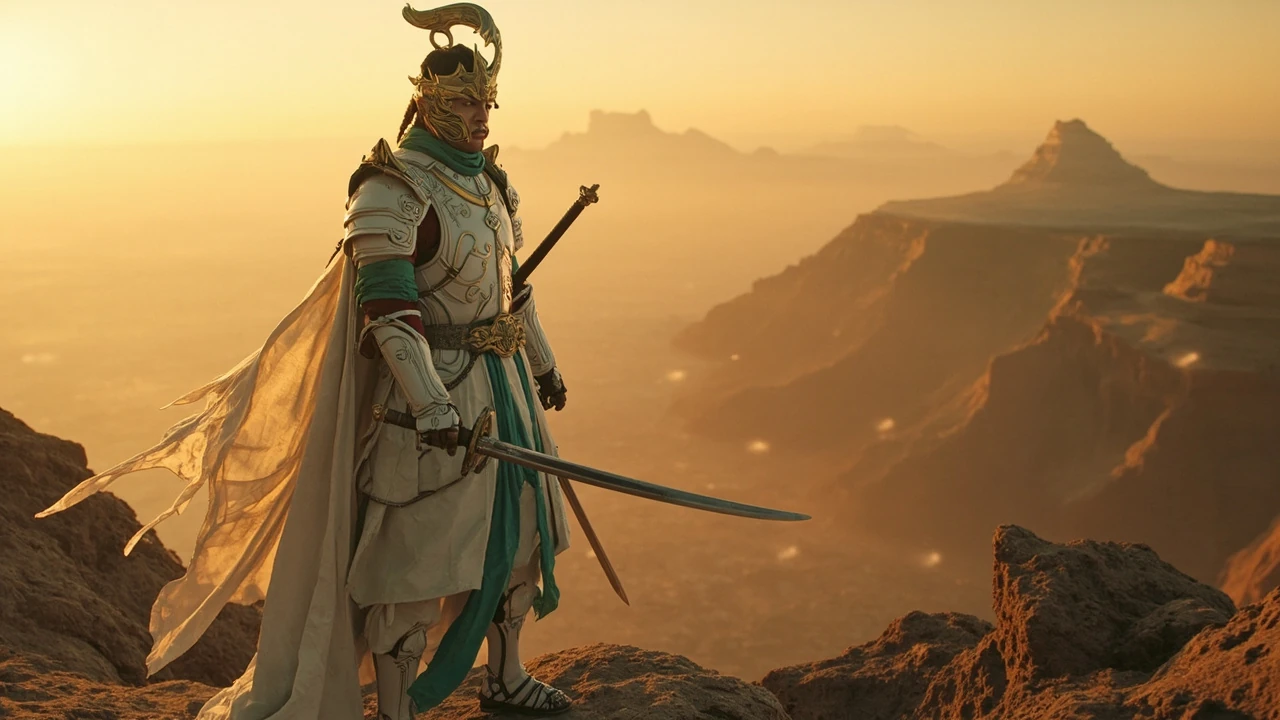
The Fierce Deity armor in Tears of the Kingdom is a three-piece set built around a striking mask, a long cape, and a layered tunic that recreates the silhouette of a specific Zelda character rather than a generic adventurer. It was added to the sequel through a post-launch Amiibo update rather than appearing in the base game shop rotation, and because none of the pieces are sold in a town and the set is not tied to a shrine or main story beat, many players only learn it exists after seeing it on another player’s Link or after scanning the relevant figure and noticing a new vendor icon on the map.
This guide covers what the Fierce Deity armor actually is in TotK, how to obtain each of the three pieces through the Amiibo and merchant sequence, how the set bonus behaves in real combat, which upgrade materials matter for long-term use, and how the set compares to the other endgame armor options a player is likely to be weighing at the same time.
What the Fierce Deity armor is in TotK
In TotK, the Fierce Deity armor consists of the Fierce Deity Mask, the Fierce Deity Armor, and the Fierce Deity Boots. Each piece is its own inventory item with its own base defense value, its own upgrade path at the Great Fairy fountains, and its own rupee price from the merchant who sells it. The set is sold by an NPC the game introduces only after a Majora’s Mask series Amiibo has been scanned, and the merchant appears in a small surface camp rather than in a town like Hateno or Kakariko.
The set is a callback to the Fierce Deity’s Mask from Majora’s Mask, where the mask transformed Link into a tall, four-armed combat form reserved for the boss fights in that game. In TotK, the same silhouette and the same white-and-teal palette are preserved, but the practical effect is purely defensive. There is no transformation, no extra weapon slot, no beam attack, and no charged strike tied to the set. That distinction matters for build planning, because the set is best treated as a high-stat armor with a strong aesthetic rather than a combat trick that changes how Link fights.
How the set is organized
Each piece follows the standard TotK armor rules. They can be upgraded at any Great Fairy fountain once that fountain has been awakened, and each tier requires specific monster parts, gems, and rupee payments that the game shows on the upgrade screen before the player confirms. The mask is usually the most recognizable part of the set in screenshots, but the torso and boots carry their own defense values and their own upgrade costs, so buying and upgrading all three at once is more efficient than picking up one piece at a time and returning to the fountain repeatedly.
Why the set has a steady following
The main draw is visual. The white and teal palette reads clearly against the warmer earth tones of Hyrule’s surface and against the cooler blues of the Depths, and the silhouette is distinctive enough to remain readable in busy screenshots or crowd scenes. For players who film, stream, or post screenshots of their playthrough, the set is a way to make Link look like a specific character from the franchise’s history rather than a generic traveler in a tunic, which is a recurring request in TotK communities on Reddit, Discord, and YouTube.
Reader intent this article is built around
The dominant question players search for is practical: how do I actually get the set, and is it worth the time and material cost. A secondary question is build integration, because the set competes with other high-defense options like the Zonaite, Soldier, and Ancient sets for the same upgrade materials. This article treats acquisition and integration as the same problem, because the cost of obtaining the set only makes sense if the resulting build is competitive with what the player could otherwise slot into the same slots.
How to unlock the Fierce Deity armor in TotK
The set is gated behind the Amiibo feature and a short in-game quest, not behind a shrine, a dungeon, or a main story milestone. The full sequence is: scan a Majora’s Mask series Amiibo, find the wandering merchant who spawns in response, speak to him and accept his errand, complete that errand, and then return to his shop to buy the three pieces individually. Each step is simple on its own, but missing any one of them leaves the pieces unsellable, which is the most common reason players believe the set is bugged or unavailable on their profile.
Step 1: scan the Majora’s Mask series Amiibo
Open the in-game Amiibo menu from the pause screen and tap a figure from the Majora’s Mask series on the right joystick of a Switch or Switch Lite. The official figure tied to this set is the one depicting Link in his Fierce Deity outfit, although other figures in the same series can also register the scan for the merchant. Once the scan is accepted, a notification appears confirming that the wandering merchant has appeared somewhere on the surface, and a bag icon is added to the map. The merchant does not spawn until the scan is registered, so the order of operations matters: a player who talks to the merchant before scanning will find the camp empty.
Players without a physical Amiibo can still trigger the same content by using a third-party NFC tag encoded with the figure data, but the supported path is to use Nintendo’s own figure on a console with a working right stick. The scan registers on the local profile, so a second profile on the same Switch will need its own scan and its own merchant quest to unlock the set on that profile.
Step 2: find the wandering merchant on the surface
The merchant is a non-combat NPC who appears in a small camp rather than in a town. Once the Amiibo scan registers, his bag icon shows up on the map in a fixed region, and fast travel to a nearby shrine or tower is usually the fastest way to reach him. Walk into the camp, speak to him, and accept the errand he offers. The errand is a fetch task gated to a specific location on the Great Sky Island rather than to a shrine on the surface, which is the part most players miss because they assume a “sky island” errand means another floating island when it is actually tied to the tutorial region above the starting plateau.
Step 3: complete the merchant’s errand
The errand itself is short. The merchant asks Link to recover a small object from a basic shrine or to interact with a specific sky island node, and the reward for completing the errand is the ability to buy the set pieces individually from the merchant’s stock. The pieces are not given as quest rewards, which is intentional: Nintendo treats the Amiibo scan as the license and the errand as a tutorial step that explains the merchant’s role, rather than treating the errand as the unlock itself.
Step 4: buy the three pieces individually
Return to the merchant after the errand is complete. The shop inventory now lists the Fierce Deity Mask, the Fierce Deity Armor, and the Fierce Deity Boots as three separate entries, each with its own rupee price. The set is sold one piece at a time, and stock is not limited, so players can buy all three on the same visit without waiting for a restock timer. The set is not available from any other vendor in the game, and it is not part of the base shop rotation in any town, so the merchant is the only source.
Common mistakes when unlocking the set
The most common failure is scanning the wrong Amiibo series. Only the Majora’s Mask series figure spawns the merchant tied to this set; a standard Link Amiibo, a Breath of the Wild series figure, or a Twilight Princess series figure will register a different reward or no reward at all. The second most common failure is forgetting to speak to the merchant after the scan registers, because the errand is added to the adventure log but does not start automatically. A third failure is buying one piece, leaving the area, and then assuming the merchant is sold out, when the shop interface simply lists the other two pieces on separate lines further down the menu.
Stats, set bonus, and what the Fierce Deity armor actually does
The Fierce Deity armor is a mid-to-high defense set with a strong cosmetic identity rather than a combat gimmick. The set bonus is Bone Attack Up, the same effect shared with the Phantom and other skeletal-themed sets, and the set does not unlock a unique transformation, charged attack, or weapon synergy. For players who care about stats, the relevant comparison is with the Zonaite set for general use, the Ancient set for specialized Guardian farming, and the Soldier set for a pure defense option with no bonus to manage.
Defense and upgrade ceiling
Each piece starts at a modest base defense and can be upgraded through four tiers at any awakened Great Fairy fountain. The fully upgraded mask contributes the largest share of the set’s total defense, with the torso and boots filling in the rest, and the combined defense at the top tier sits in the same range as other endgame sets like the Zonaite and Ancient armors. The upgrade path is the same four-tier structure used by other Amiibo armor sets, and the materials required at each tier are the same monster parts and gems that other endgame sets demand, so a player who has already upgraded one set will not be learning a new farming route from scratch.
Set bonus behavior
Wearing all three pieces at once activates Bone Attack Up, a small but consistent damage bonus against skeletal enemies such as Stalkoblins, Stalmoblins, and the skeletal variants found in the Depths. The bonus applies while the three pieces are equipped; it does not stack with itself, so wearing the set together with another skeletal-themed set does not double the bonus or layer a second instance of Bone Attack Up on top of the first.
What the set does not do
The set does not give Link the four-armed Fierce Deity transformation from Majora’s Mask. It does not change the charge attack, does not add a beam weapon, and does not grant any unique bow, shield, or Zonai device. The cape is purely cosmetic and does not provide extra gliding distance, cold resistance, or heat resistance, and the mask has no extra effect beyond its defense value and the standard Amiibo aesthetic. The Fierce Deity armor also has no stealth bonus, no swim-speed bonus, and no climbing-speed bonus, so it does not compete with the Sheikah, Zora, or Climber’s sets on their own terms.
For context on how this set fits into the wider franchise and how Zelda titles have historically handled cosmetic versus functional armor design, the broader history of the Legend of Zelda series places this design philosophy in a useful frame.
When the set bonus actually matters
The Bone Attack Up bonus is most useful in the Depths, where skeletal enemies are common and the set’s white silhouette is easy to read in low light. For most overworld exploration, the bonus is small enough that a specialized set like the Charged set, the Yiga set, or the Zonaite set will outperform it in their own niches. For major boss fights, the bonus is effectively irrelevant because the main bosses in TotK are not skeletal and the bonus does not apply to them.
Materials and upgrade path at the Great Fairy
Upgrading the Fierce Deity armor follows the same four-tier system used by other Amiibo sets in TotK. The relevant Great Fairy is the one located closest to the player’s current travel plan, because the upgrade cost is the same at every awakened fountain and the upgrade menu does not change. The first upgrade tier requires basic monster parts, the second tier asks for mid-range drops, the third tier escalates to rare materials, and the fourth tier requires star fragments plus large gem equivalents, which is the same material ceiling that other endgame sets hit.
Material tiers and where to farm them
Each tier asks for a combination of monster parts, gems, and rupees. The base materials are Bokoblin horns and Moblin fang equivalents that drop from common surface enemies, the mid tier asks for Lizalfos tails, Hinox guts, and similar mid-game drops, and the top tier requires star fragments that fall from the night sky plus large gems mined from ore deposits in the Depths. The cost scales predictably, so a player who farms the parts for one set can reuse the same farming route for similar sets without re-learning the loop.
Comparison of upgrade cost with other endgame sets
| Armor set | Final tier defense | Highest-cost material | Rupee total | Set bonus |
|---|---|---|---|---|
| Fierce Deity | High | Star fragment plus large gem | High | Bone Attack Up |
| Zonaite | High | Large zonaite plus boss drops | High | Energy recharge |
| Soldier | High | Star fragment plus large gem | High | None |
| Ancient | High | Ancient parts plus star fragment | High | Ancient proficiency |
| Yiga | Mid | Stealthfin plus rare drops | Mid | Stealth Up |
The Fierce Deity armor sits in the same cost band as the other endgame sets, so the decision to upgrade it depends on which set bonus and which visual identity the player values rather than on a shortage of materials. A player who already has star fragments banked for the Soldier or Ancient set can usually divert a small share of that stockpile into the Fierce Deity upgrade without disrupting a parallel build.
Time cost versus material cost
The rupee total is the visible cost, but the hidden cost is the time spent traveling to the right farming spots, waiting for star fragments to fall, and revisiting the Great Fairy fountain to confirm each upgrade. For a player who already has a Depths loop set up for zonaite mining, the Fierce Deity upgrade slots into the same loop with no new mechanics to learn. For a player who is still building that loop from scratch, the upgrade is best queued behind a more universal set like the Zonaite or Soldier armor, because those sets also enable other parts of the late game.
How the Fierce Deity armor compares to other endgame sets
The most useful comparisons are with the Zonaite set for general use, the Ancient set for Guardian hunting, the Soldier set for pure defense, the Yiga set for stealth, and the Charged set for storm-based combat. Each of those sets has a specific bonus that the Fierce Deity set does not replicate, so the choice between them is really a choice about which bonus the player wants to keep active during the late game, with the Fierce Deity set filling a niche for players who would rather have a recognizable look than a specific combat effect.
Zonaite set versus Fierce Deity
The Zonaite set is designed around the energy economy that powers Zonai devices. Its set bonus reduces the energy cost of using fans, cannons, hover bikes, and other Zonai constructs, and the armor itself is a natural fit for a build that relies on those devices for traversal and combat. The Fierce Deity set offers no equivalent bonus, so it is a weaker choice for a Zonai-focused build, but it is a better choice for a player who values visual identity over energy economy and who does not want to commit every combat encounter to a Zonai loadout.
Ancient set versus Fierce Deity
The Ancient set is the best-in-slot option for Guardian farming and for the final boss. Its set bonus multiplies damage with Ancient weapons, including the Ancient Blade saw and the Ancient Short Sword, and the armor itself has high defense at the top tier. The Fierce Deity set cannot compete with that bonus in its own specialty, so it is a poor primary choice for a dedicated Guardian farm. The two sets are not mutually exclusive, however, and a player can keep both at the top tier by planning material routes that share star fragments and large gems, switching between them depending on whether the current activity is Guardian hunting or general exploration.
Yiga set versus Fierce Deity
The Yiga set is a stealth set built around sneaking into the Yiga Clan hideout, passing through the Yiga clan maze, and avoiding combat with the clan itself. Its set bonus is Stealth Up, which is not relevant to the Fierce Deity’s identity. The Yiga set is also weaker in pure defense at the top tier than the Fierce Deity set, so a player who needs both stealth and high defense usually layers the Yiga set with a Sheikah stealth bonus from a different source rather than substituting it for the Fierce Deity set in a general-purpose loadout.
Charged set versus Fierce Deity
The Charged set is the right choice for a player who relies on charged attacks and storm-based combat. Its set bonus discharges electricity on hit and is a natural fit for a build that uses the Thunderblade, the Thunderstorm weather effect, or any weapon that benefits from shock damage. The Fierce Deity set is a neutral choice that does not interfere with charged attacks but does not enhance them either, so the Charged set is the better pick for that specific build, while the Fierce Deity set remains a better pick for a player who switches between weapon types without committing to a single combat style.
Soldier set versus Fierce Deity
The Soldier set is the simplest comparison. It has high defense at the top tier and no set bonus to manage, which makes it a strong default for a player who has not yet committed to a specific build. The Fierce Deity set offers the same defense band plus a small Bone Attack Up bonus and a more distinctive look, so it is a reasonable upgrade over the Soldier set once the player has the materials to spare, with the caveat that the Soldier set is cheaper to upgrade and easier to replace if a piece is lost in the Depths.
When the Fierce Deity armor is the right choice
The set is a strong choice in three specific cases: when the player values visual identity enough to trade a specialized set bonus for a more recognizable look, when the player is already farming a route that shares materials with the upgrade path, and when the player wants a neutral high-defense set that does not lock them into a specific combat style. In all other cases, a specialized set is a better return on the same materials, and the Fierce Deity set is better kept as a secondary loadout for screenshots and exploration rather than as a main combat set.
Visual identity as a build constraint
Tears of the Kingdom is a long game, and many players spend dozens of hours at the late-game stage where armor sets are roughly interchangeable in raw defense. For those players, visual identity is a real constraint rather than a cosmetic afterthought, and a set that looks distinctive enough to be recognizable in a screenshot is worth a small material cost over a more generic set. The Fierce Deity set is one of the few designs in TotK that is immediately readable as a specific character reference, which is a form of self-expression that the game does not otherwise reward through its armor system.
Material route sharing
Because the Fierce Deity set uses the same endgame materials as the Zonaite and Ancient sets, a player who is already farming star fragments and large gems for one set can add the Fierce Deity set to the same route without additional cost. In that scenario, the set is essentially a free cosmetic upgrade, and the only real cost is the time spent at the Great Fairy fountain confirming each upgrade tier. Players who have already banked star fragments for a Soldier or Ancient upgrade can usually redirect a small share of that stockpile into the Fierce Deity upgrade without slowing down their primary build.
Build neutrality
The Fierce Deity set does not enforce a combat style. It is a high-defense set with a single small bonus, so it works in any build that does not rely on a specific set bonus to function. That neutrality is useful for a player who switches between combat, exploration, and puzzle solving without committing to a single specialty, and it is the case where the Fierce Deity set is the strongest general-purpose choice among the Amiibo armor options. It is also a reasonable default for a player who has not yet decided which endgame set bonus they want to commit to, because the Fierce Deity pieces can be swapped out one at a time without wasting a fully upgraded set.
Build integration tips for the Fierce Deity armor
Once the set is owned and upgraded, the practical question is how to wear it in a real play session. Because the set bonus is small and the defense is high, the set is best used as a main combat loadout with a specific weapon, or as a secondary loadout for exploration and screenshots. Mixing individual pieces with other sets is also possible, but the set bonus only triggers when all three pieces are worn together, so any mixed loadout has to give up the Bone Attack Up bonus in exchange for whatever bonus the substituted set provides.
Pairing with a weapon loadout
The set is weapon-agnostic, so it pairs well with high-damage weapons like the Master Sword, the Lightscale Trident, or a Royal Guard’s claymore. The Bone Attack Up bonus is small, so it should not be the deciding factor in a weapon choice. Instead, the set should be paired with a weapon that benefits from high defense, because the extra defense allows the player to take more risks with close-range combat and to stay in a fight long enough for food buffs to matter. Players who like to swap between a bow and a melee weapon will find the set’s neutral bonus easier to work with than a set that locks them into a specific weapon type.
Pairing with food and elixirs
Because the set bonus is small, food and elixirs are the main source of combat bonuses in a Fierce Deity loadout. A high-defense set like the Fierce Deity armor is a good base for an attack-up food build, because the extra defense allows the player to stay in combat long enough for the food effect to matter. A stealth or stamina build is less effective with the set, because the set does not contribute to either attribute and the player will need to source those bonuses from a different armor set or from food effects alone.
Mixed loadouts and piece substitution
Mixed loadouts are possible by combining one or two Fierce Deity pieces with another set. The most common combination is the Fierce Deity mask with a stealth set, because the mask is the most recognizable part of the design and the stealth bonus comes from the rest of the set. This combination sacrifices the set bonus, but it allows the player to keep the visual identity while gaining a more useful combat effect. A second common combination is the Fierce Deity boots paired with a climbing set, because the boots are the least visually distinctive piece and the climbing bonus is more valuable for traversal than the small Bone Attack Up effect.
Storage and inventory management
The Fierce Deity set is a three-piece set with three separate inventory entries, so a player who owns both the Fierce Deity set and the Zonaite or Ancient set at the top tier is committing six inventory slots to high-tier armor alone. Because key items, weapons, bows, shields, and materials also take up inventory space, it is worth thinking about whether the Fierce Deity set will be worn often enough to justify those slots. For a player who plans to use it only for screenshots, storing it at a house in Hateno or at a travel gate chest and switching in only when needed is a reasonable compromise.
Loadout performance table by activity
| Activity | Fierce Deity fit | Better alternative | Why |
|---|---|---|---|
| Surface exploration | Strong | Soldier or Climbing | Neutral bonus and high defense hold up; climbing bonus wins on walls |
| Depths farming | Strong | Zonaite | Skeletal bonus is useful, but energy recharge speeds loops |
| Guardian hunting | Weak | Ancient | Ancient proficiency multiplies damage against the target enemy type |
| Final boss | Defensible | Ancient | Defense is high, but the Ancient set bonus is built for that fight |
| Yiga Clan infiltration | Weak | Yiga | Stealth Up is required to pass the hideout disguise checks |
| Storm and shock builds | Neutral | Charged | Set does not interfere, but Charged set adds discharge on hit |
Read that table as a quick reference rather than a verdict. The Fierce Deity set is rarely the worst choice for any one activity, and it is often the best choice when the activity is also an opportunity to take screenshots or to film a session.
Frequently asked questions
Do I need the Majora’s Mask Amiibo to get the Fierce Deity armor in TotK?
Yes. The set is sold only by the wandering merchant who appears after scanning the Majora’s Mask series Amiibo. There is no in-game alternative that unlocks the set without the figure, and the merchant will not spawn until the scan is registered. A third-party NFC tag can be used to simulate the scan, but Nintendo’s own figure is the supported path and the one the game is designed around.
Can I get the Fierce Deity armor without an Amiibo?
Not through the official path. The set is gated behind the Amiibo feature, and the merchant’s errand cannot be triggered without a scan. The set is not part of the base game, the DLC, or any main story quest, so a player who cannot use Amiibo on their console will not see the set appear in their inventory. Some players report seeing the set in shops on other profiles, but those appearances are tied to a scan that was completed on a different profile or on a different console.
What is the set bonus for the Fierce Deity armor in TotK?
The set bonus is Bone Attack Up, a small damage bonus against skeletal enemies. The bonus is shared with other skeletal-themed sets, and it does not stack with itself or with a second instance of the same effect. The set does not unlock a transformation, a charged attack, a unique weapon, or any change to Link’s combat animations.
Is the Fierce Deity armor good for the final boss in TotK?
The set is a defensible choice for the final boss because of its high defense at the top tier, but it is not the best-in-slot option. The Ancient set outperforms it for the final boss because of its set bonus against Guardian-type enemies and its synergy with Ancient weapons. The Fierce Deity set is a better choice for a player who values visual identity over the Ancient set’s combat bonus, and for a player who is not running an Ancient weapon loadout at the time of the fight.
How much does it cost to fully upgrade the Fierce Deity armor?
Fully upgrading the set is a high-tier cost in line with other endgame sets. The top tier requires a star fragment plus large gems, and the total rupee cost across the three pieces is comparable to the Zonaite or Ancient sets. The cost is spread across the four upgrade tiers, so a player can pause the upgrade path at any tier and resume later without losing progress, as long as the Great Fairy fountain used for the upgrades is the same one that was used for the earlier tiers.
Can I dye the Fierce Deity armor?
No. The set uses a fixed color palette and cannot be dyed through the normal dye system. The white and teal colors are part of the design, and they are preserved across all upgrade tiers without exception. A player who wants a recolored set will need to mix the Fierce Deity pieces with dyed pieces from another set, which is the same compromise used for any other fixed-palette armor in the game.
Is the Fierce Deity armor available in both single-player and multiplayer?
The set is a single-player item. TotK does not have a standard multiplayer mode in the way that some other Switch titles do, and the set cannot be transferred between profiles on the same console. Each profile must complete the Amiibo scan and the merchant’s errand separately to unlock the set on that profile, and the inventory, upgrade progress, and materials are not shared between profiles even on the same Switch.
Does the Fierce Deity set work with the wolf Link costume?
No. The wolf Link costume is a separate Amiibo feature tied to the Twilight Princess series figure, and it does not interact with the Fierce Deity set. The two features are independent and do not share inventory entries, upgrade materials, or set bonuses. A player who wants both features active for the same session will need to switch between them rather than expecting them to combine.
What is the best Great Fairy location for upgrading the set?
Any of the four Great Fairy fountains can upgrade the set, and the cost is the same at each once it has been awakened. The best location is the one closest to the player’s current travel plan, because the upgrade does not require a specific fountain and there is no hidden bonus for using one over another. The fountain near Tabantha is the most central for a player exploring the surface, and the fountain near the Depths is the most central for a player who is already farming skeletal enemies and star fragments in that region.
Should I buy all three pieces at once or one at a time?
Buy all three pieces on the same visit, because the merchant’s stock is not limited and there is no reason to spread the purchase across multiple trips. The set bonus only triggers when all three pieces are worn at once, so owning the full set is a prerequisite for the bonus. The pieces are not sold as a bundle, so the player must add each one to the cart separately, and the rupee cost is the same whether the pieces are bought together or in separate transactions.
Leave a Reply