



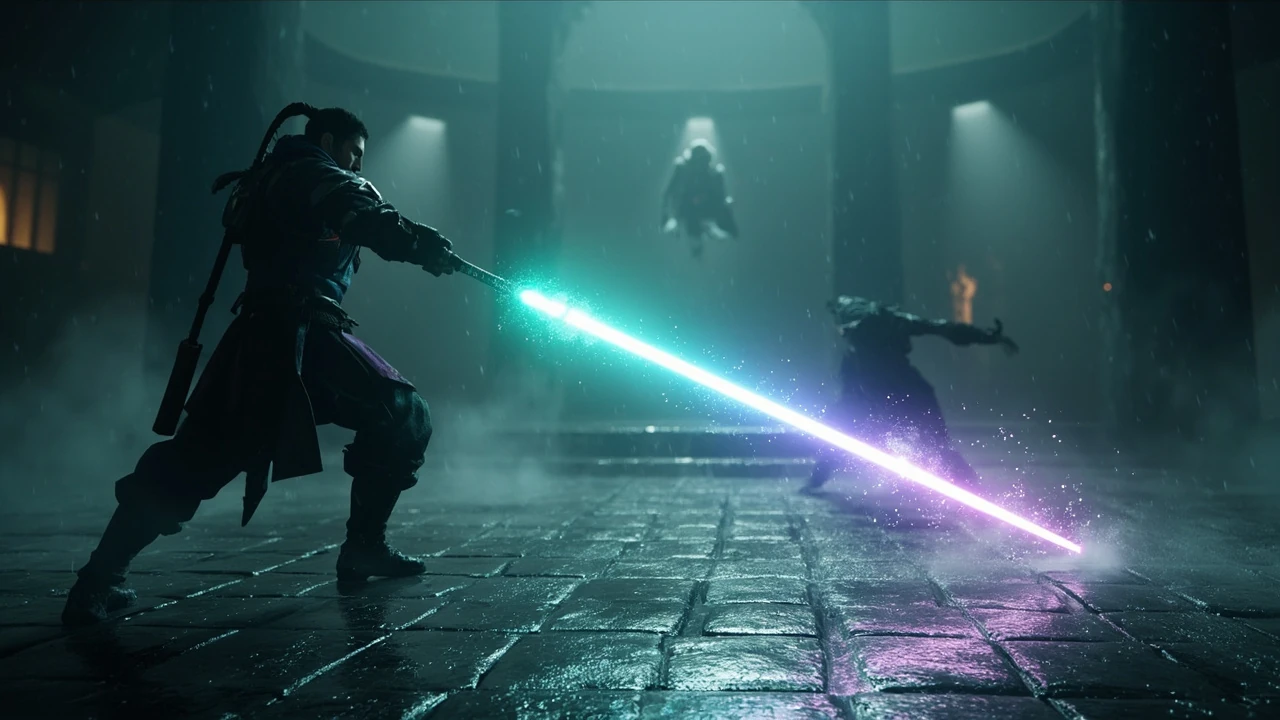

A meaningful lost soul aside review has to do more than score the game. It has to explain how a small team built an action RPG with cinematic combat, what trade-offs show up in the final build, and what readers should verify on launch day. This article treats the game as a production case study, walking through the design pillars, the Unreal Engine 5 plumbing, the scope signals worth checking, and the post-launch questions that will determine whether the game lands for you.
There is also a practical reason to write the review this way. Most coverage of Lost Soul Aside so far has focused on the long development story, on the China Hero Project relationship, or on the early trailers. That kind of context is useful, but it is not enough to decide a purchase in 2026, when the launch build, the day-one patch, the system requirements, and the post-launch roadmap all matter. A developer-oriented review should put those signals on the page, side by side with the design read, so you can decide on your own hardware, your own taste, and your own time budget.
Lost soul aside review: the production story that frames the build
The clearest way to read any indie AAA-aimed action RPG is to start with the production context. Lost Soul Aside began as a solo Unreal Engine 4 prototype, grew through a Sony China Hero Project partnership, and survived the long road that runs from a viral announcement trailer to a finished commercial release. That arc shapes the final product: high ambitions, a small core team, a long content tail, and a tech stack that matured alongside the project.
For a developer-facing review, the production story matters because it tells you what kind of defects to expect. A team that spent years scaling up its pipeline will tend to have stable combat, polished cutscenes, and a few rough edges in open areas or in systems that came in late. A solo-origin project will show taste in its combat feel and unevenness in its side content. Reading the game with that lens keeps the analysis grounded. It also explains why so many early concerns about the project were about the team size, the engine migration, and the scope of the campaign, rather than about the core combat idea, which was always the strongest part of the pitch.
The official Lost Soul Aside Wikipedia entry documents the project history, the Unreal Engine foundation, and the relationship with the China Hero Project, all of which are useful context before evaluating the game itself. The page also tracks the long road from the 2016 prototype footage to the final launch window, which is the kind of timeline a developer reader can use to calibrate expectations on patch cadence, engine familiarity, and team maturity.
What kind of game is Lost Soul Aside, mechanically?
Mechanically, Lost Soul Aside is a single-player action RPG built around real-time melee combat, a small ranged moveset, a partner entity that fights alongside the player, and a hub-and-shoulder structure of linear stages with light exploration. Combat is the headline. The other systems exist to feed combat progression, story pacing, and visual variety.
Three pillars do most of the work:
- Stylized spectacle combat built around a fast, telegraphed weapon and a partner that can be summoned for special moves.
- Light RPG growth in the form of equipment, a skill tree, and progression that nudges build identity without becoming a deep ARPG simulation.
- Linear stage design with cinematic set-pieces that lean on Unreal Engine 5 lighting, post-processing, and short boss arenas to deliver impact.
Those three pillars decide whether the game is for you. If you want the layered buildcraft of a Soulslike, a monster-hunter grind, or a sprawling open world, the answer will be no. If you want short, focused action stages with a small but expressive moveset and a strong visual identity, the answer is closer to yes. The mechanic profile also makes the game’s identity clear: this is a stage-based action RPG in the tradition of Devil May Cry and Bayonetta, with a small RPG skin, rather than a build-driven action RPG in the tradition of Dark Souls or Nioh. Reading the mechanics through that lens avoids the most common category errors in early coverage.
Combat feel, mechanics, and the moveset that defines the game
Combat is the single most important factor in any action RPG review, and it is the strongest argument for Lost Soul Aside. The base kit is built around a single fantasy-mecha blade with light, heavy, and aerial inputs, a short dash with i-frames, a parry, and a partner-summon system that adds a third dimension to encounters.
From a design perspective, the combat system borrows from a well-known template, then compresses it:
- Light attack chains that build a style meter, encouraging players to stay aggressive instead of turtling.
- Heavy finishers that consume style to deal burst damage or break enemy stances.
- A partner entity that can be called in for a single high-impact attack, with its own cooldown, so the player is constantly weighing which moment is worth the resource.
- A dash-cancel that creates space, resets aggression, and enables the game’s most satisfying combos.
- Boss telegraphs that are readable, fair, and tuned for short learning arcs rather than long memorization.
That is not a new combat system. It is, however, a well-paced one. A review should not praise the system for novelty, but it can credit it for clarity, responsiveness, and the way it pushes the player forward. The other honest read is that the partner mechanic is the one design idea that genuinely belongs to this project: the way the partner’s cooldown, voice line, and visual flash are tuned to give the player a half-second decision point in every major fight is the kind of small, repeatable system choice that defines a combat game’s identity.
Several combat signals are worth verifying on your own machine before deciding:
- Frame data feels consistent, with no obvious input drops during long combos.
- Dash-cancels respond predictably, without hidden cooldowns or animation locks.
- Partner summon windows are clearly readable, so the player can plan around them instead of reacting to surprise locks.
- Boss recoveries after a parry or break are long enough to reward aggression, not so long that combat becomes trivial.
- Camera framing holds up during multi-enemy fights, especially in narrower corridors where the partner’s line-of-sight can clip into walls.
Scope, length, and the question of “is there enough game?”
Scope is the most honest weakness a developer-focused review can flag. Lost Soul Aside is a short-to-medium-length action RPG. That is not a defect, but it changes the value calculation, because the launch price, the size of the studio, and the visible production values all push expectations toward a longer experience.
To set expectations, the practical scope profile looks like this:
| Scope element | Typical range in this style of game | What to look for in Lost Soul Aside |
|---|---|---|
| Main story | 12-20 hours | Confirm whether side content is required to reach the canonical ending |
| Side content | Optional missions, collectibles, light exploration | Check whether side content rewards gameplay or only cosmetic items |
| Build variety | One or two clear build archetypes | Confirm whether the skill tree supports more than one viable playstyle |
| Replay value | New Game Plus, higher difficulty, fashion | Look for difficulty modes, NG+ modifiers, or unlockable cosmetics |
| Performance budget | Target hardware specs and expected frame rates | Check official specs, frame-rate targets, and any dynamic resolution behavior |
When you read any review, map those rows to what the writer actually played. A 12-hour game reviewed as if it were a 40-hour game is a category error, not a quality claim. The same is true of a short game that gets praised as “lean and focused” when the writer simply did not play enough of the side content to know whether it is lean or thin. The honest way to frame scope is to compare the launch price to the campaign length, the post-launch roadmap, and the replay value, then let the reader decide whether the ratio works for them.
Tech stack: Unreal Engine 5, Nanite, Lumen, and what they actually buy you
Lost Soul Aside is built on Unreal Engine 5. That is not a stylistic choice, it is a delivery mechanism. The game leans on Lumen for global illumination in some scenes, Nanite for dense environment geometry, and the engine’s Niagara-driven VFX for combat readability. None of those systems are free, and each one comes with a cost a developer-focused review should name.
The practical trade-offs to be aware of:
- Asset density vs. memory: Nanite meshes are GPU-friendly, but instance count, materials, and texture pools still need budgeting, especially on mid-range cards.
- Lumen cost vs. baked lighting flexibility: Lumen improves look but raises the cost of moving lights, dynamic weather, and reflective surfaces, which can affect lower-tier hardware.
- NPC and VFX budget: dense combat scenes with many particles and physics objects are the most likely place to see frame-time spikes.
- Streaming seams: linear stage design helps, but check for pop-in on textures, decals, and lighting on long sight lines.
- Shader compilation hitches: first-time shader compile on PC is a known UE5 pain point, and a developer review should at least mention the studio’s stance on precompiled shaders or pre-launch driver updates.
None of that is a verdict. It is a checklist. The right question is not “does it use UE5” but “how well is UE5 tuned for the target hardware, and what gets sacrificed when the budget tightens.” That question is also why frame-time data matters more than peak FPS in any review of a UE5 action RPG, because the engine’s most common failure mode is not a slow average, but a wide frame-time distribution during VFX-heavy scenes.
Visual identity, art direction, and where style beats resolution
Art direction is one of the game’s strongest selling points. The visual identity leans on a few repeatable motifs: a luminous fantasy-mecha blade, a stylised silhouette, high-contrast lighting, and a palette of deep blues, warm ambers, and clean whites. The result is readable from a distance, which is exactly what action combat needs.
To evaluate the visual direction honestly, look at four traits:
- Silhouette clarity: can you tell the player apart from the enemies at a glance, even with chaotic effects on screen.
- Color hierarchy: do enemy telegraphs, partner abilities, and player buffs each have a distinct hue, so the eye can separate them.
- Material variety: are there enough surface types (wet stone, cloth, metal, organic) to keep the world from looking like one repeated shader.
- Lighting mood: does each stage have a distinct lighting identity, or do environments blur into a single visual wash.
If the game passes those four checks, art direction is doing real work. If it fails any of them, the visual budget is being spent on spectacle rather than communication. A useful test is to mute the music, lower the brightness, and watch a boss fight on a small screen: if you can still parse the player’s location, the partner’s cooldown, and the boss’s next move, the art direction is carrying the combat. If you cannot, the visuals are decorative rather than functional, and the game will feel muddy on handheld displays and on TVs with aggressive post-processing.
Story, characters, and the narrative architecture
The story is a personal-quest narrative with a stylized world, an otherworldly partner, and a small cast. For a review, the meaningful question is not whether the plot is original, but whether the storytelling tools support the combat loop.
The narrative architecture tends to follow a familiar pattern:
- Short cutscenes at the start and end of stages, used as punctuation rather than exposition dumps.
- In-engine dialogue scenes that do most of the world-building work.
- Environmental storytelling that lives in side rooms, optional logs, and small details in the geometry.
- Partner relationship beats that reframe the player’s combat abilities as story moments.
That architecture works for an action RPG, because it keeps the player moving. Where it tends to struggle is in giving the side cast enough room to breathe, and in giving the late-game twist enough space to land. If the campaign had a rough patch, that is the area to inspect first: look for whether the supporting cast is developed through optional logs, through in-engine scenes, or through both, because that choice often decides whether the ending feels earned or rushed.
Audio, music, and the soundscape of combat
Combat audio is half the experience in any action RPG, and a serious lost soul aside review should look at it with the same care as frame data. The sound design is built around a small set of signature weapons, a layered mix of impacts, whooshes, partner voice lines, and boss motifs, and a score that drives stage identity.
Three audio checks tell you most of what you need to know:
- Mix clarity: can you hear your own weapon, your partner’s call, and the boss telegraph at the same time without one drowning out the others.
- Hit feedback: do light, heavy, and partner attacks have distinct sound signatures so the player can play by ear.
- Dynamic range: does the music swell in boss fights without making quieter exploration sections feel flat.
If the game fails any of those, it is a mix problem, not a music problem. A good score still feels weak when the master limiter crushes dynamic range. The other test is to play with a headset on, then with TV speakers, then with a cheap pair of earbuds: if the combat audio still reads clearly on the cheapest output, the mix is doing the work, and the game will hold up in the noisy living-room conditions where most players actually play.
Performance, frame pacing, and the hardware tiers that matter
Performance is the area where a developer-focused review can be most useful. Action RPGs live or die on frame pacing, because combat is built around precise timing.
The performance check that matters most is not peak frame rate, but frame-time consistency. A 60 fps target with frequent 80 ms spikes feels worse than a stable 45 fps with tight 22 ms frame times. The first thing to verify on any build is how the game holds up during the worst scenes, not the easiest ones. That is also why a single 30-second clip of a boss fight tells you more than a synthetic benchmark, because the worst-case scene in an action RPG is almost always the boss arena, where particles, decals, dynamic lighting, and physics objects all stack on top of one another.
To frame the hardware question clearly, the practical tiers look like this:
| Tier | Typical resolution target | Expected visual setting | What to verify first |
|---|---|---|---|
| High-end GPU, modern CPU | Native 4K or DLSS/FSR Quality | High or Ultra | Whether ray-traced effects, if any, hold a stable frame time |
| Mid-range GPU, modern CPU | 1440p with upscaling | High | Whether dense combat scenes dip below the target refresh rate |
| Older or laptop GPU | 1080p with upscaling | Medium | Whether Lumen or volumetric effects can be turned down without breaking the look |
| Console (mid-generation) | Dynamic resolution | Console preset | Whether frame pacing holds during boss fights, where most combat particles stack |
None of those rows are predictions. They are the questions a developer-oriented review should put on the page, so readers can answer them on their own hardware. The same is true of VRAM: a 12 GB card is comfortable at 1440p with high settings, while an 8 GB card will start to feel pressure on Ultra textures, even before Lumen is added on top. If the studio published a recommended-spec sheet, cross-check it against the worst-case scenes described above, and against your own experience with other UE5 action RPGs at the same tier.
Accessibility, difficulty, and player comfort options
Accessibility is no longer a side note. A modern action RPG needs at least a baseline of options, and a review should flag whether the build is honest about what it ships and what it does not.
The categories worth checking:
- Input accessibility: remappable controls, separate bindings for combat and menus, hold-to-tap toggles for sprint and aim.
- Visual accessibility: color-blind modes, UI scaling, subtitle sizing, motion-reduction options for camera shake and quick-time prompts.
- Audio accessibility: subtitle presence for dialogue and critical audio cues, mono audio, separate volume sliders for music, SFX, and voice.
- Difficulty layers: a separate difficulty option that affects damage taken and dealt, with or without a “story” preset that lowers combat pressure.
Lost Soul Aside is a single-player game, so accessibility is a comfort decision, not a competitive one. Still, the list above is the floor a 2026 action RPG should clear, and any gaps belong in the review. It is also worth checking whether the difficulty options are global, per-stage, or per-boss, because a single global slider can hide the fact that one specific late-game encounter is tuned for a much higher skill ceiling than the rest of the campaign, which is a real design signal and not just a personal taste call.
Live operations, post-launch plans, and what to expect after release
Live operations is a smaller question for a linear single-player action RPG, but it is not zero. Players should know whether the publisher plans free updates, paid DLC, or both, and whether the launch build is a stable platform or a service that will keep expanding.
Three signals to verify on launch day:
- Day-one patch size and content: a small patch that polishes is a good sign; a giant patch that rewires systems is a yellow flag.
- Post-launch roadmap: a clear roadmap is better than silence; vague promises are worse than either.
- Save and progression safety: confirm that saves do not depend on online services, and that New Game Plus works as described.
For a developer audience, the live operations question is also a technical one. How are patches built and delivered, how does the team handle regression on existing saves, and how do they keep modding-friendly files separate from protected content if the game supports user content at all. A useful test on launch day is to back up a save before the day-one patch, install the patch, and confirm that the save still loads and that any NG+ state is preserved. If the studio publishes hotfix notes that mention save migration, that is also useful information, because it tells you how the team is treating existing player data.
How Lost Soul Aside compares to the action RPG field
Comparison is the area where a review adds the most value to a reader who already knows the genre. The most useful comparisons are not “is it better than X” but “is it the right substitute for Y if you finished Y and want something close.”
The honest comparison chart looks roughly like this:
| Reference game | Closest overlap with Lost Soul Aside | Where Lost Soul Aside differs |
|---|---|---|
| Devil May Cry 5 | Stylized spectacle combat with a tight kit | Adds light RPG growth and a partner, less combo depth |
| Bayonetta 3 | Aggressive scoring, summoning mechanics | More linear stage structure, slower build identity |
| Final Fantasy XV | Partner-driven combat, cinematic tone | Smaller open zones, no car travel, tighter combat |
| Stranger of Paradise: Final Fantasy Origin | Solo-origin action RPG, modern engine | Less loot-driven, more hand-built stage design |
| Code Vein | Partner summon, anime-adjacent art, short campaign | More readable combat, no Soulslike stamina meter |
Use that map as a sanity check. If the description does not match your taste in the references, the game is probably not for you. If two of the rows describe games you already love, the game is worth a serious look. The other honest read is that Lost Soul Aside is closer in spirit to a 2010s action RPG than a 2020s live-service action game, and that is part of its appeal. If you finished Devil May Cry 5 and wanted something in the same shape, with a small RPG skin and a partner mechanic, this is the most direct substitute on the 2026 release calendar.
Common criticisms, and how to weigh them
Every action RPG launches with a wave of criticism. The reader’s job is to separate the criticisms that come from real design problems from the ones that come from the game simply not being the kind of game the critic wanted.
The criticisms worth taking seriously:
- Short campaign length: a real concern if the price is set for a longer game, manageable if the price matches a 12-15 hour experience.
- Limited build variety: a real concern if the skill tree branches do not change the player’s combat feel, acceptable if the moveset is the main reward.
- Linear exploration: a real concern if the marketing implied open zones, fair if the game is sold on stage design.
- Localized performance dips: a real concern that can usually be fixed by patches, but check whether the dips break combat or only the cutscenes.
- Weak side cast: a real concern if the late-game emotional beats depend on characters you barely met, manageable if the partner is the only character the story actually commits to.
The criticisms that are usually a mismatch:
- “The combat is too simple” from players who wanted a Soulslike.
- “The story is too short” from players who wanted a 50-hour RPG.
- “The world is too linear” from players who wanted an open-world action game.
- “The skill tree is too small” from players who wanted a build-simulation ARPG.
Knowing which side of the line a complaint falls on is the difference between a useful review and a generic one. It is also why the most reliable signal is the criticism that keeps showing up across reviews with different tastes, because that is the kind of feedback that usually points at a real design or production gap, rather than at a personal preference.
Who Lost Soul Aside is for, and who should pass
Any honest recommendation section has to name the audience, not just praise the game. Based on the design pillars above, the audience map is fairly clear.
You will probably enjoy Lost Soul Aside if you:
- Like action RPGs that reward aggressive play over defensive turtling.
- Prefer a 12-20 hour campaign over a 50-hour open-world grind.
- Want a stylish visual identity, not a photorealistic simulation.
- Enjoy partner mechanics that add a tactical layer without becoming a full buddy-AI system.
- Care about clean frame pacing more than absolute graphical fidelity.
You will probably not enjoy it if you:
- Want deep buildcraft, multiple classes, or extensive stat tuning.
- Need an open world or a long tail of side content.
- Prefer tactical or turn-based combat to real-time melee.
- Rely heavily on accessibility features the game does not provide.
- Want a co-op or multiplayer action RPG.
That list is the simplest decision rule a review can give. If you fall into the first group, the game is worth your time and money. If you fall into the second, no score will fix the mismatch. The other honest read is that this is a launch-window purchase, not a backlog purchase, because the post-launch roadmap and the day-one patch quality are part of the value calculation, and they are easier to evaluate on day one than six months later.
The launch checklist a developer-oriented review should hand the reader
By the time you finish a lost soul aside review, the reader should be able to act on it. A short, concrete checklist does more for that than another paragraph of praise.
Run through this list before you buy or play:
- Confirm the platform build you intend to play (PC, console, or both) and the regional store pricing.
- Check the official system requirements and any day-one patch notes before installing.
- Read at least one independent frame-time test, not just a max-FPS benchmark.
- Watch a single unedited boss fight on your target platform to see real combat density.
- Verify the save system, the New Game Plus rules, and whether progress is online-dependent.
- Look up the post-launch roadmap and the publisher’s history of patching or not patching.
- Compare the campaign length to the launch price, not to your preferred length.
- Check whether the recommended-spec tier matches your GPU and VRAM, not just your CPU.
If those checks pass, the game is a safe buy for its target audience. If two or more fail, the right move is to wait for patches or a sale. None of those checks are about hype, mood, or franchise loyalty: they are the kind of questions a developer audience can answer in a weekend, and they are the kind of questions a thoughtful review should put on the page, instead of burying them in a verdict paragraph.
Verdict: a focused action RPG that lives or dies on combat feel
Pulling the threads together, the right way to write a lost soul aside review is to treat the game as a focused action RPG with a strong combat identity, a confident visual style, and a scope that matches its team’s history. Its strengths are real: responsive combat, readable spectacle, a clear partner mechanic, and a tight stage-based structure. Its weaknesses are equally real: limited build variety, a short campaign, and the usual performance and accessibility gaps that come with a small team on a big engine.
For the audience the game is built for, those trade-offs are fair. For anyone expecting a 40-hour open-world RPG or a Soulslike mastery curve, the game will feel small. The honest verdict is not a number. It is a fit statement, and that fit statement is the one the rest of this review is built to support.
For a second perspective that focuses more on the launch coverage and reviewer consensus, the IGN lost soul aside review is a useful counterpoint to the production-focused take in this article. The two reads do not have to agree on a score, but they should agree on the design pillars, the scope, and the launch-day questions, because those are the things a reader can verify on their own hardware, in their own time, without trusting either review’s number.
Frequently asked questions
What is the best way to approach a lost soul aside review without spoilers?
Focus the first read on the production history, the combat pillars, and the scope profile. Skip any section that walks through the ending or the late-game partner reveals. A good spoiler-light review treats the campaign like a film, naming the genre, the runtime, the visual identity, and the core mechanics, without narrating the plot. Save the detailed story discussion for a second pass once you have finished the game.
Is Lost Soul Aside a Soulslike?
No. Lost Soul Aside is a linear action RPG with a parry and a dash, but it does not use the Soulslike stamina meter, the heavy stat tuning, or the slow methodical pace that defines the Soulslike genre. If you want a Soulslike, this is not it. If you want a faster, more aggressive action RPG with a partner mechanic, it is closer to a Devil May Cry or Bayonetta cousin, with light RPG growth layered on top.
How long is the Lost Soul Aside campaign?
The main campaign is short to medium in length, in the range of roughly 12-20 hours depending on how much optional content you pursue. A completionist run that includes side content and a New Game Plus pass can extend that. Treat any number you see in a review as the writer’s path, not a guaranteed length for every player.
What engine does Lost Soul Aside use, and does that matter for performance?
Lost Soul Aside is built on Unreal Engine 5, which gives the team access to Nanite for dense geometry, Lumen for dynamic global illumination, and Niagara for combat VFX. Engine choice matters because each of those systems has a real cost. A good performance review breaks those costs down by scene type, not just by an average frame rate, so you can predict how the game will behave on your own hardware.
Does Lost Soul Aside have multiplayer or co-op?
No. Lost Soul Aside is a single-player only experience. The partner in the game is an AI-controlled entity, not a second human player, and the design is built around a single-player combat loop. If you are looking for a co-op action RPG, this game is not the right fit.
What kind of player should buy Lost Soul Aside on launch day?
The launch-day buyer profile is a player who already enjoys stylized action combat, has a PC or console that meets the recommended specs, and is comfortable with a 12-20 hour campaign. If you need a long game, deep buildcraft, or extensive accessibility features, it is safer to wait for post-launch coverage, patches, and a possible sale.
Are there accessibility options in Lost Soul Aside?
Lost Soul Aside ships with a baseline of modern options, including remappable controls, subtitle support, and a difficulty setting. The depth of the accessibility menu varies, so a serious review should look at color-blind modes, motion-reduction toggles, separate audio sliders, and any one-handed control schemes. If any of those are missing, the gap is worth flagging rather than hiding.
Will Lost Soul Aside get post-launch DLC or free updates?
The publisher has signaled interest in post-launch support, but the specific roadmap depends on how the game performs at launch. The reliable signals to look for are the day-one patch notes, the first official roadmap, and the studio’s track record on previous projects. Treat any unconfirmed DLC as speculation, and wait for an official announcement before budgeting for it.
Is Lost Soul Aside worth playing if I already finished a lot of action RPGs?
Yes, if you want a focused, stylish, and relatively short action RPG. No, if you are looking for a game that redefines the genre. Lost Soul Aside is a competent entry in a crowded field, with its strongest contribution being the partner mechanic and the way the combat loop pushes the player toward aggressive play. The right mental model is “well-made comfort food” rather than “genre milestone.”
What is the single biggest reason to play Lost Soul Aside?
The combat feel. If the base moveset clicks for you, the partner summon, the dash-cancel, and the boss telegraphs form a loop that carries the entire game. If the combat does not click, nothing else in the game will save the experience. The fastest way to decide is to watch one unedited boss fight on your target platform and see whether the input pacing and the visual readability match your taste.
Leave a Reply