



Choosing the Right NFT Gaming Development Company for Your Web3 Project
Gaming has changed forever. Players no longer just want to spend hours grinding for items they never actually own. They want real digital ownership, verifiable scarcity, and open secondary markets.
That is where blockchain comes in. Building a successful Web3 title requires a deep mix of game design, cryptography, backend engineering, and smart contract architecture.
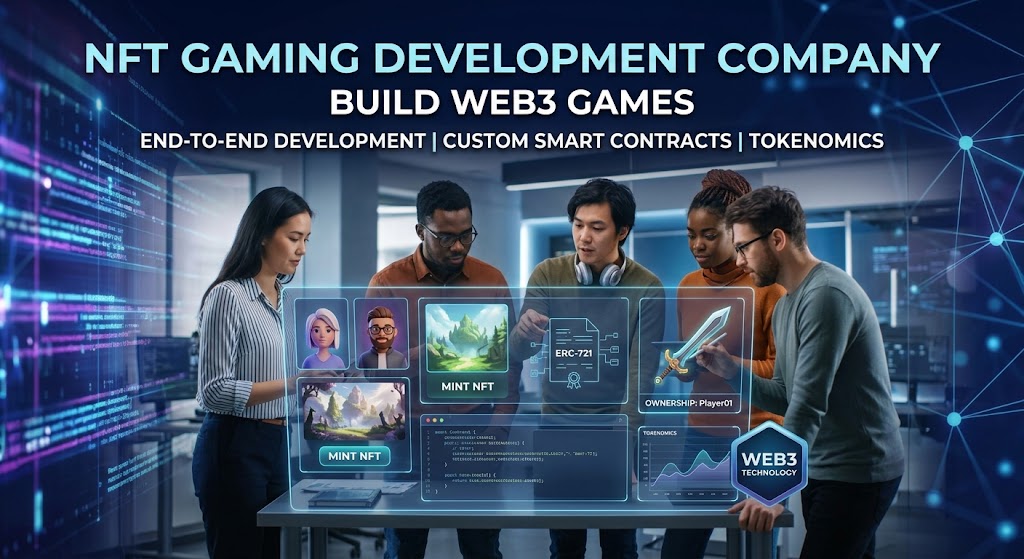
Finding a trusted nft gaming development company is often the first real milestone for founders and studios looking to transition into this space. But navigating the development landscape can feel overwhelming. Here is what you need to know to build a game that lasts.
Why Partnering With an NFT Gaming Development Company Accelerates Launch
Building a traditional game is already hard work. Adding blockchain mechanics adds entirely new layers of complexity. You need bulletproof smart contracts, wallet integrations, decentralized storage, and a balanced economy.
An experienced nft gaming development company helps you avoid costly architectural mistakes early on. They bring ready-made frameworks and battle-tested codebases to the table. This dramatically cuts down your time to market.
Here is what a specialized team handles for you:
- Custom smart contract creation for ERC-721, ERC-1155, and dynamic NFTs.
- Seamless wallet connection onboarding for non-crypto native players.
- Scalable layer-2 gas optimization to keep transaction costs practical.
- Cross-chain bridging and multi-chain interoperability design.
- Off-chain data storage setup using IPFS and Arweave.
Beyond code, a full-service nft gaming development company understands game loops. They know how to merge traditional gameplay hooks with token economies without making the game feel like a glorified spreadsheet.
When players genuinely enjoy playing, token retention follows naturally. That balance is tough to achieve on your own.
Working with a dedicated team lets your internal crew focus on art direction, community management, and lore while experts handle the blockchain infrastructure.
Core Technical Capabilities of an NFT Gaming Development Company
Not all development agencies offer the same depth of service. Some focus purely on artwork and front-end interface development. Others excel at low-level blockchain protocol development and smart contract security auditing.
When evaluating potential development partners, you must look closely at their technical stack. A complete team usually handles front-end game engines, server infrastructure, smart contracts, and decentralized storage systems.
Choosing an nft gaming development company with cross-chain experience ensures your game won’t get locked into a single ecosystem if network demands shift.
The table below breaks down the essential technical capabilities you should expect from a full-cycle development partner:
| Development Domain | Technologies & Frameworks | Primary Focus in Game Architecture |
|---|---|---|
| Game Engines | Unreal Engine 5, Unity, Godot | Rendering graphics, physics, client-side gameplay logic |
| Blockchain Networks | Ethereum, Polygon, Immutable X, Solana, BNB Chain | Asset minting, settlement speed, transaction scalability |
| Smart Contracts | Solidity, Rust, Vyper, OpenZeppelin | NFT logic, staking pools, marketplace mechanics |
| Decentralized Storage | IPFS, Pinata, Arweave | Permanent metadata hosting and media asset storage |
| Backend & Indexing | Node.js, Go, GraphQL, The Graph | Real-time state syncing, player inventory management |
Choosing the right tech stack depends heavily on your target audience. For instance, high-fidelity PC action titles often require Unreal Engine 5 paired with high-throughput chains like Immutable X or Polygon.
On the other hand, casual mobile titles might prioritize lightweight WebGL setups with seamless social logins and low-friction custodial wallets.
A capable nft gaming development company guides you through these choices based on performance goals and target player demographics.
They ensure your technical stack can handle thousands of concurrent players without server crashes or transaction bottlenecks.
Key Stages in the NFT Game Development Lifecycle
Creating a Web3 game requires a structured approach that balances creative vision with technical execution. Skipping steps in security or economic modeling often leads to project failures after launch.
Working with an organized nft gaming development company keeps the project moving smoothly across every phase. Here is how a typical project flows from concept to live operations:
- Game Design & Tokenomics Architecture: Defining core loops, token sinks, and asset utility.
- Prototyping & Gameplay Testing: Building quick playable loops to test core fun before adding blockchain features.
- Smart Contract Writing & Auditing: Developing secure token contracts and sending them for third-party security checks.
- Backend & Wallet Integration: Linking the game engine client with decentralized networks and indexing services.
- Alpha & Beta Testing Rounds: Running closed tests with community members to gather feedback and stress-test systems.
- Mainnet Deployment & Public Launch: Minting initial collection drops and launching game servers to the public.
- Post-Launch Live Operations: Managing ongoing balancing patches, events, and economic adjustments.
Security deserves special attention during this lifecycle. Reentrancy bugs or flaws in smart contract logic can cause catastrophic treasury losses.
That is why thorough internal code reviews and external audits are non-negotiable steps before launching on mainnet networks.
A disciplined nft gaming development company enforces rigorous testing standards at every stage, protecting both your platform and your player base.
They also establish automated monitoring systems to track live smart contract activity and detect potential threats in real time.
Monetization Models and Economic Design in Web3 Games
Sustainable economics separate lasting Web3 titles from short-lived hyper-financialized projects. Early play-to-earn models struggled because they relied almost entirely on new buyer inflows to sustain token rewards.
Modern gaming projects focus on play-and-own models instead. They put player entertainment first while using digital ownership to enhance engagement and retention.
Collaborating with an experienced nft gaming development company helps you balance token sinks and sources to avoid inflation.
Understanding different revenue and reward models helps you build a solid economic system. Here is a breakdown of common monetization structures used today:
| Monetization Strategy | Mechanism | Primary Value Driver |
|---|---|---|
| Marketplace Trading Fees | Taking a 2% to 5% royalty fee on peer-to-peer secondary sales | High trading volume and active peer economy |
| Initial NFT Sales & Mints | Primary sale of character assets, lands, skin cosmetics, or passes | Community anticipation and early access utility |
| In-Game Microtransactions | Selling consumable items, craft materials, or battle passes | Ongoing player engagement and seasonal updates |
| Asset Crafting & Upgrades | Charging token sinks to combine, repair, or upgrade assets | Deflationary pressure on token circulating supply |
| Tournament Entry & Passes | Collecting entry fees for competitive matches and leaderboards | Skill-based gameplay and competitive ecosystem |
A balanced economy creates strong token sinks. These mechanisms reduce circulating supply when players use tokens for upgrades, custom crafting, or tournament fees.
When token sinks match or exceed emissions, asset values stabilize. This creates a much healthier ecosystem for long-term players.
Engineers and economists in an nft gaming development company must collaborate closely during early design to stress-test these economic systems under different user growth scenarios.
Predictive modeling helps prevent run-away inflation and ensures that early adopters do not destroy the game economy for later entrants.
What to Consider When Selecting an Engineering Partner
Selecting the right technical studio is one of the most critical choices you will make. You need a team that communicates clearly, respects deadlines, and understands blockchain mechanics deeply.
Look at past work. Has the team shipped real, functional software, or do they only produce conceptual trailers and whitepapers?
A reliable nft gaming development company will always show you live playable demos or verified smart contracts on blockchain explorers.
Consider these essential criteria when vetting prospective development partners:
- Proven track record in shipping live multiplayer or single-player game client applications.
- In-house expertise across smart contract development, frontend engineering, and game design.
- Strong focus on security practices, clean code documentation, and third-party security audits.
- Transparent project management workflows with clear milestone delivery schedules.
- Deep understanding of player onboarding, account abstraction, and gasless transaction options.
Ask prospective partners how they handle account abstraction. Modern games should let players start playing immediately using email or social logins, creating embedded wallets behind the scenes without complex seed phrase setups.
Removing onboarding friction dramatically improves conversion rates for traditional players who are brand new to crypto.
Great development teams prioritize user experience just as much as underlying chain architecture.
When you align with the right nft gaming development company, you gain more than just developers-you gain strategic partners who share your vision for the future of digital entertainment.
Frequently Asked Questions
What Services Does an NFT Gaming Development Company Offer?
An end-to-end studio handles everything required to build and launch a blockchain game. This includes game concept design, art asset creation, 3D modeling, smart contract architecture, and web frontend development. They also manage wallet integrations, custom marketplace development, server engineering, and post-launch maintenance.
How Long Does It Take to Develop a Full NFT Game?
Development timelines depend heavily on project scope and complexity. A lightweight 2D casual game or web-based card game might take 4 to 6 months. On the other hand, a complex 3D multiplayer action title built on Unreal Engine 5 often takes 12 to 24 months from initial concept to mainnet launch.
Which Blockchain Is Best for Web3 Game Development?
The best chain depends on your specific performance requirements. Ethereum offers high security but higher gas fees. Layer-2 solutions like Polygon, Immutable X, and Arbitrum provide fast transactions and negligible fees, making them ideal for high-volume gaming assets. Networks like Solana and Avalanche are also popular choices for fast throughput.
How Do You Ensure Smart Contracts Are Secure Against Exploits?
Security requires a multi-layered testing process. Developers follow strict coding standards using audited libraries like OpenZeppelin. They run automated unit tests and static code analysis tools during development. Finally, the code undergoes rigorous external security audits by independent cybersecurity firms before mainnet deployment.
Can Existing Traditional Games Be Converted Into NFT Games?
Yes, traditional games built on engines like Unity or Unreal Engine can integrate Web3 mechanics. Developers connect blockchain SDKs to handle asset ownership, wallet connections, and token transactions. This approach lets studios preserve core gameplay while introducing verifiable digital ownership and secondary market economies.
What Is Account Abstraction and Why Is It Important for Games?
Account abstraction lets developers hide blockchain complexities from players. Instead of forcing users to manage seed phrases or approve every transaction via browser extensions, account abstraction enables familiar social logins, gasless transactions, and seamless session keys. This makes Web3 games as easy to play as mainstream titles.
How Much Does It Cost to Build an NFT Game?
Costs vary widely based on visual quality, target platforms, and feature complexity. Simple 2D or turn-based titles typically range from $30,000 to $80,000. Feature-rich 3D multiplayer games with custom marketplaces, tokenomics engines, and advanced visuals usually cost between $100,000 and $300,000+.
Building a successful game requires balancing fun gameplay with secure, scalable technology. Partnering with an experienced development team helps you turn your concept into a polished, market-ready title that engages players for years to come.
Leave a Reply