



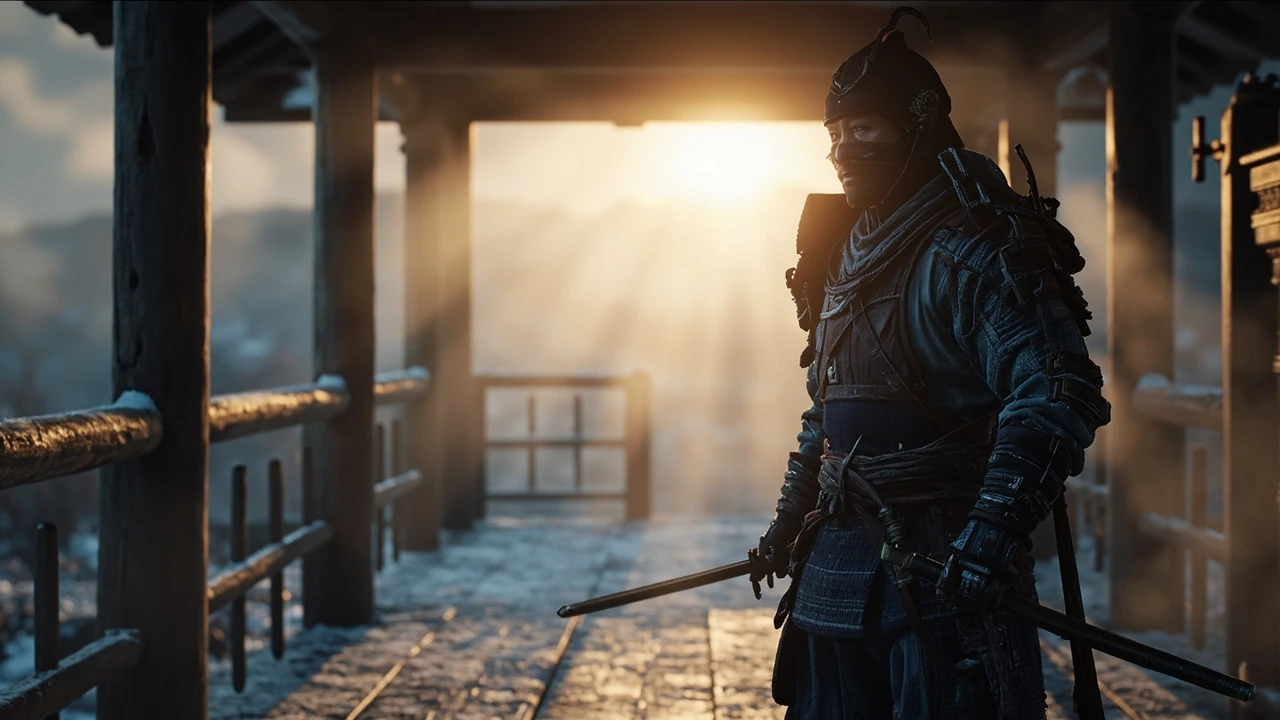

Armor of the undying ghost of yotei and what the phrase actually points to
When players search for the armor of the undying ghost of yotei, they are usually looking for a specific in-game reward in Sucker Punch Productions’ 2025 open-world action title Ghost of Yōtei, the follow-up to Ghost of Tsushima. The phrase has settled into community shorthand for one of the more distinctive armor sets in the game, tied to the protagonist Atsu’s late mother and to a story arc that frames her journey across Ezo as a literal hunt. The set is not a single hidden costume buried behind a cheat code or a glitch. It is the set that players assemble by following the optional Undying thread of side content, and it operates as both a narrative reward and a mechanical signature for a measured, stance-aware style of play.
This article focuses on that armor set as a piece of game design. It looks at how Sucker Punch built the set, what the studio’s producers say about the role of armor in Ghost of Yōtei, how the set fits into the broader armor progression system, and how players actually use it in the open-world loop. It is written for players who want a careful breakdown of the set, and for developers interested in how a narrative-led armor system can be structured inside a single-player action RPG.
Where the armor of the undying ghost of yotei sits in the game’s armor system
Armor in Ghost of Yōtei is built around three layers: a base outfit, a charm or trinket slot, and a layered gear piece. Each named armor is associated with a specific archetype and a small number of stat effects. Most sets also have an unlockable visual variation, often earned through a separate quest or by completing a specific challenge. The armor of the undying ghost of yotei sits at the top of that structure. It is one of the late-game sets the studio described as the kind of reward that reflects how a player has chosen to engage with the world, not simply how many enemies they have killed.
For developers, the more interesting question is how the design team has chosen to use armor progression as a vehicle for narrative closure. The Undying set is a clear example. Sucker Punch did not gate it behind a single late-game mission. Instead, the set is unlocked through a constellation of optional activities that each reference a memory of Atsu’s mother. The reward feels earned, but it is also thematically coherent, because every piece the player collects is associated with a specific anecdote, a region on the map, and a stance or combat behavior the mother once favored.
That decision has practical consequences for the moment-to-moment game. The set sits alongside several other late-game silhouettes, including bounty-focused coats, heavy coastal plate, and companion-driven attire, and the player can move between them as the situation demands. The armor of the undying ghost of yotei is the one most clearly aimed at players who have already decided that they want the game to feel slightly more deliberate and slightly less lethal than it did at the start.
Producer commentary on armor and progression in Ghost of Yōtei
In a DigiPen showcase interview, producer Maria Bourg discussed how the team approached armor and progression as story infrastructure, explaining how individual armor sets, including those tied to Atsu’s family history, were designed to mark the player’s relationship with the world rather than to serve as a simple tier list. That framing matters for understanding the armor of the undying ghost of yotei, because the set is a deliberate answer to the question of how a sequel can honor a predecessor’s armor progression without copying it.
How the armor of the undying ghost of yotei is unlocked
The set is not handed out after a single boss fight or a single quest completion. The community understanding of the unlock path, drawn from Sucker Punch’s public materials and from in-game UI copy, is that the armor of the undying ghost of yotei is assembled by completing a chain of optional content that the game labels as the Undying chain. Each piece is its own small arc, and the chain only becomes visible once the player has crossed a specific point in the main story.
- The headpiece is awarded after the player finishes a short investigation sequence that begins at a shrine marked on the map after a specific story chapter.
- The chest piece is found inside a hidden cache in a late-game region. The cache is gated by a side activity that asks the player to find a sequence of carved wooden tokens scattered across the area.
- The arm guards are tied to a non-combat encounter with an NPC who is mourning a death from the opening act. The conversation branches depend on choices the player has already made.
- The leg wraps are earned by completing a set of timed traversal challenges that reference how Atsu’s mother used to move through the mountains.
- A cosmetic variant of the full set is unlocked by finishing every piece of optional content associated with the chain, including a small set of poetry fragments that the player has to piece together.
What is notable for developers is that none of these steps is required to finish the main story. Sucker Punch has designed the set as a reward for players who choose to read the world’s quieter corners. The armor of the undying ghost of yotei therefore does not appear on a checklist. The player either notices the pattern and follows it, or they do not. The chain is also forgiving in a small way. Several of the activities can be completed in any order, and the player can return to a missed piece after the main story has been resolved.
What the armor looks like and why its design language matters
Visually, the armor of the undying ghost of yotei is deliberately quieter than some of the more ornate sets in the game. It uses a muted indigo and a faded off-white, with hand-stitched panels that resemble clothing rather than plate. The set reads as ceremonial rather than martial, which fits its narrative function. Atsu’s mother is not presented as a frontline combatant. The armor suggests preparation, ritual, and the idea of a journey finished rather than a journey in progress.
Sucker Punch has a long history of using costume to communicate social position and emotional state. In Ghost of Tsushima, the player’s armor visibly accrued dirt and damage as the story progressed, a visual cue that the narrative pressure was taking a physical toll. In Ghost of Yōtei, the Undying set is the opposite gesture. It is the cleanest version of Atsu that the game ever shows. The design language signals that the player has reached a point in the story where the protagonist can finally put down some of the weight she has been carrying.
The restraint shows up in smaller details. The set does not include a visible clan crest, it does not glow under any weather condition, and the only ornament is a small stitched motif along the collar that references a tree Atsu’s mother is shown planting in a flashback early in the campaign. Those choices are easy to miss in motion, but they are the kind of detail the studio has historically built armor sets around.
Stat profile and combat role of the armor of the undying ghost of yotei
Bourg also describes how the studio used a non-linear, open-world approach to the campaign, where players can hunt the six targets named in the opening in a flexible order, and where the armor set associated with Atsu’s mother is intentionally tucked into the connective tissue between major story beats. The result is an armor that feels like a discovery, not a checkpoint. For a developer, this is a useful case study in how a major set can be used to communicate that the world has layers the player has not yet peeled back. The relevant background on the studio’s production approach is documented in DigiPen’s interview with Maria Bourg on producing Ghost of Yōtei, and the broader project context is summarized on the Wikipedia page for the game, which provides useful background for this point.
The set is not a one-stat wonder. Its bonuses are designed to reinforce a specific, supported play style. The community consensus, drawn from in-game descriptions and patch notes, is that the armor of the undying ghost of yotei biases toward defensive play, with a small bonus to resolve, a boost to healing from certain kinds of food and rest, and a passive effect that increases the duration of a particular stance.
For a developer, the important point is that Sucker Punch has tuned the set so that it feels distinct from the more aggressive sets in the game. A player who is leaning into a fast, dual-weapon style will not get as much out of the Undying set as a player who prefers a measured, stance-aware approach. The design is a quiet push toward the kind of combat the studio associates with the emotional tone of the arc, and it is also a way of keeping the late game from collapsing into a single dominant build.
The numbers are modest on purpose. The set is not intended to outscale the player’s other options, and the defensive bonuses are tuned so that the player still has to make real choices about when to commit to a fight. The reward for using the set is a smoother experience, not a fundamentally different one.
How the set interacts with stances, weapons, and charms
In Ghost of Yōtei, stances determine the player’s default melee behavior, and charms modify stats in narrow ways. The armor of the undying ghost of yotei interacts with both. The set’s signature passive extends the window during which a particular mid-game stance remains active, which is useful for players who have built a loadout around that stance. Combined with a charm that reduces incoming posture damage, the set creates a clear identity: a patient, stance-focused, late-game fighter who is willing to trade aggression for stability.
That identity is also the point. Sucker Punch has used armor sets in the past to support role identity within a single-player action game. The Undying set is one of the clearest cases of the studio giving a single set a real mechanical silhouette, then backing that silhouette with a narrative reason for using it. The set does not lock the player out of any weapon category, but the bonuses are wasted on a katana-and-shortsword build that is built around constant stance switching. The sweet spot is a build that commits to one stance for longer stretches of a fight.
Charms are where the set becomes interesting. A charm that boosts healing on a successful parry stacks with the set’s resolve bonus in a way that rewards precise play, and a charm that grants a small amount of damage back on a perfect dodge turns the set into a surprisingly effective dueling kit. The result is a set that feels different depending on the charms the player has already committed to, which is part of what keeps the late-game loop from going stale.
Armor of the undying ghost of yotei as a design case study
For developers, the set is interesting for a handful of reasons that go beyond the costume itself.
- It is unlocked through optional content, not through main story progression. That decision gives the studio a way to reward exploration without forcing every player to engage with the side content.
- Its stat profile is narrowly defined. The set is not a strict upgrade over every other set. It is one of several late-game silhouettes, each tuned to a different style.
- Its visual language is restrained. The set signals its narrative role through the absence of decoration as much as through any ornamentation.
- Its narrative beats are split across regions. The player cannot simply follow a single quest marker, and the chain rewards players who notice repeated references in unrelated side content.
- Its mechanical identity is reinforced by the available charms and stances, so the set does not exist in isolation from the rest of the progression system.
Together, these choices suggest a deliberate move away from a single best-in-class armor and toward an armor system that supports play-style diversity. The armor of the undying ghost of yotei is one expression of that move, and the rest of the late-game sets in Ghost of Yōtei can be read as companion expressions of the same idea. The studio is using the armor layer of the game to teach the player that the late game is meant to be played in more than one way.
Comparison with other notable Ghost of Yōtei armor sets
It helps to place the Undying set alongside a few of the other late-game sets in the game. The first table uses descriptions drawn from Sucker Punch’s in-game copy and from community documentation. It is intended as a developer-facing comparison of roles, not a tier list. A second table, further down, breaks down the unlock conditions for the Undying set specifically, because that is where most of the design intent lives.
| Set | Visual identity | Stat focus | Suggested play style | How it is typically unlocked |
|---|---|---|---|---|
| Armor of the Undying Ghost of Yotei | Muted indigo and off-white, hand-stitched, ceremonial | Defense, resolve, healing bonuses, stance duration | Patient, stance-focused, defensive | Optional Undying chain across multiple regions |
| Bounty Hunter’s Coat | Darkened leather, visible repair patches, traveling mercenary silhouette | Bounty reward bonuses, stealth damage after a successful ambush | Aggressive stealth, target tracking | Progressing the six-target hunt and a final optional contract |
| Wandering Monk Robes | Loose pale cloth, simple rope belt, travel-worn | Reduced fall damage, faster traversal recovery, minor resolve boost | Traversal-heavy exploration, light combat | Finding scattered shrines and finishing a related meditation chain |
| Iron of the Northern Coast | Heavy layered plates, salt-stained, dark blue cloth beneath | High damage reduction, slower stamina regeneration | Frontline tank, group fights | Late-game duels and a faction quest chain |
| Twin Wolf Attire | Striped indigo and gray, paired companion motifs | Companion damage and survivability buffs | Companion-driven combat, controlled aggression | Bonding a specific companion and finishing their personal arc |
The table makes the design intent easier to read. Each set has a distinct mechanical silhouette. The armor of the undying ghost of yotei is the one that most clearly doubles as a narrative reward, but it is not the only set with a story attached. Most late-game sets in the game double as a way to mark a relationship the player has built with an NPC, a region, or a theme.
The second table is a tighter breakdown of the Undying chain itself, since that is where the design choices are most visible.
| Piece | Activity type | Region | Key narrative beat | Required for main story |
|---|---|---|---|---|
| Headpiece | Investigation at a marked shrine | Central Ezo | Atsu remembers her mother praying at a mountain shrine | No |
| Chest piece | Carved-token hunt and hidden cache | Northern coast | The mother’s belongings are found in a salt-worn chest | No |
| Arm guards | NPC conversation with branching choices | Southern forest | A surviving villager recounts the mother’s last kindness | No |
| Leg wraps | Timed traversal challenges | Mountain interior | The mother’s climbing route is retraced step by step | No |
| Visual variant | Poetry fragment collection | All of the above | A short verse is assembled from fragments across the regions | No |
What the second table makes clear is that the chain is not a single quest with five steps. It is five small activities spread across four regions, each tied to a different side system in the game. The armor of the undying ghost of yotei is what holds them together.
How the set changes the player’s relationship with Ezo
The set is also a small but real change to how the player moves through the world. Because its bonuses lean toward defense and healing, the player wearing the armor of the undying ghost of yotei is encouraged to take fights they might have skipped otherwise. Sucker Punch has used this kind of soft rebalancing before. The result is a late-game loop in which the world feels slightly less lethal once the player has invested in the set. That is a design choice, not an accident. The studio is using a costume to teach the player that the story has reached a point where survival is more plausible than it was at the start.
For developers, this is a useful example of a single armor set acting as both a stat rebalance and a tone shift. The same effect could be achieved with a difficulty slider or a global buff, but the costume-based approach carries the change inside the fiction. The player is not being told that the game has gotten easier. They are being told, through the armor they are wearing, that Atsu has changed. The illusion is more durable than a popup would be, and it is also more personal.
There is a small trade-off. Because the set biases toward defense, the player who keeps it on for the entire late game is giving up some of the more aggressive bonuses available from other late-game sets. That is a fair price for a coherent experience, and it is one of the reasons the studio has not put the set behind a single hard gate.
Player-facing guidance: getting the most out of the set
For a player who has just finished assembling the armor of the undying ghost of yotei, the most useful adjustments are small.
- Pair the set with a charm that reduces incoming posture damage. The combination turns the set’s natural resilience into a real advantage in duels.
- Use the extended stance window to commit to longer mid-fight sequences. The set rewards patience more than it rewards burst damage.
- Keep an eye on the food and rest system. The set’s healing bonus only matters if the player is actually using the rest loop.
- Do not feel obligated to switch away from the set when the story moves into a high-intensity region. The set is tuned for those encounters as well.
- Wear the visual variant that matches the moment. The set has at least one quieter look that fits the late-game emotional tone better than the more decorated default.
- Consider slotting a parry-friendly charm if the player is comfortable with the timing. The set’s resolve bonus turns successful parries into a small but reliable heal.
- Keep at least one other late-game set stored. The set is not ideal for every encounter, and the player will want a backup for fights that demand more aggression.
None of these adjustments is required, but together they make the set feel like a coherent choice rather than a costume change. That is part of what the design is asking the player to do. The set is a tool, but it is also a statement of intent about how the player wants to spend the final hours of the campaign.
What developers can borrow from the armor of the undying ghost of yotei
The set is a small case study in how a single-player action RPG can use armor progression to do narrative work. A few of the design choices are easy to translate.
- Treat major armor sets as story rewards, not just stat upgrades. Even a short, optional chain is enough to give a set emotional weight.
- Avoid a single best-in-class set. Several late-game silhouettes with distinct play-style identities make the armor system feel like a design choice rather than a checklist.
- Use visual restraint as a signal. The cleanest look in the game can be the most important, because it tells the player that something has changed in the protagonist.
- Gate the most narrative armor sets behind optional content. The choice protects players who only want the main story, and it gives explorers a real reward.
- Tie the set’s stat profile to its narrative role. A defensive, patient set belongs on a character who has reached a more measured stage of her journey.
- Distribute the unlock across regions. A single late-game quest marker is less interesting than a chain that pulls the player back into areas they have already visited.
- Reinforce the set with charms and stances rather than raw numbers. The result feels integrated with the rest of the progression system.
None of these ideas is new on its own. What is interesting about the armor of the undying ghost of yotei is that the studio has used all of them at once in a single set, and that the player can experience the design without having to read a design document. The set is, in a small way, a public explanation of how Sucker Punch wants its action RPGs to feel at the end of a long campaign.
Common misconceptions about the armor of the undying ghost of yotei
Because the set is one of the more talked-about rewards in Ghost of Yōtei, several misconceptions have settled into the conversation.
- The set is not a secret hidden ending. It is a normal reward for completing an optional chain, even if the chain is easy to miss.
- It is not the strongest set in the game. It is one of several late-game sets with overlapping but distinct roles.
- It is not gated by a New Game Plus run. The set is available in a standard playthrough once the player has reached the appropriate region.
- It is not a single cosmetic unlock. The set has at least one visual variant, and the player has to choose whether to use it.
- It is not required for the canonical ending. The game does not check for the set when the final cutscene plays.
- It is not a cheat or a debug reward. The set is part of the published game and is described in Sucker Punch’s in-game copy.
- It is not a reskin of an early-game set. The model, the texture work, and the stat profile are all unique to the late-game chain.
These clarifications matter because the set’s value comes from what the player chooses to do, not from any mechanical necessity. A design that quietly rewards curiosity is a design that does not need a checklist, and that is part of why the armor of the undying ghost of yotei has become a reference point for how a single armor set can carry narrative weight in a modern open-world action game.
Frequently asked questions
What is the armor of the undying ghost of yotei?
The armor of the undying ghost of yotei is a late-game armor set in Sucker Punch’s 2025 open-world action game Ghost of Yōtei. It is associated with the protagonist Atsu’s late mother, and it is assembled through an optional chain of side content rather than a single main story mission.
Is the armor of the undying ghost of yotei the best armor in the game?
It is one of several late-game sets with distinct roles. It is tuned for patient, defensive, stance-focused play. Other late-game sets are stronger in different situations, so there is no single best-in-class option.
How do I start the Undying chain?
The chain is typically introduced at a shrine that becomes available after a specific main story chapter. Once the player interacts with the shrine, the set’s first piece becomes visible on the map, and the rest of the chain opens up gradually across the regions the player has not yet explored.
Do I need to finish the main story to get the armor of the undying ghost of yotei?
No. The set is gated by region access and by optional content, not by main story completion. A player who is willing to explore can start the chain well before the credits roll.
Does the armor of the undying ghost of yotei affect the ending of Ghost of Yōtei?
No. The set does not change the canonical ending of the game. It is a reward for engaging with the world, not a branching path.
Can I get the armor of the undying ghost of yotei in New Game Plus?
Yes, the set is available in a standard playthrough and can be carried into New Game Plus if the player has already assembled it. The studio has not published a specific New Game Plus rule set as of this writing, so behavior could be subject to change with future patches.
Which stance works best with the armor of the undying ghost of yotei?
The set’s signature passive extends the active window of a specific mid-game stance. Players who have already built a loadout around that stance will get the most out of the set, but the defensive bonuses are useful with any stance that rewards patience.
Is the armor of the undying ghost of yotei purely cosmetic?
No. The set has real stat bonuses, a signature passive, and at least one visual variant. Its mechanical and narrative value are part of the same design.
Why is the set called the armor of the undying ghost of yotei?
The name is a community shorthand. The in-game label references Atsu’s mother, who is the emotional center of the Undying arc. The phrase “undying ghost” reflects how the mother’s memory persists through the side content the player is asked to follow.
What should I do if I cannot find the Undying chain?
Most players find the chain by following a shrine marker that appears after a specific story chapter. If the marker has not appeared, the most likely explanation is that the player has not yet reached the required chapter. There is no hidden trigger outside the main story progression in the base game.
Leave a Reply