



NFT Game Development Companies and The Future of Web3 Gaming
Gaming has changed completely over the last few years. You used to play a video game for hours, unlock rare skins or powerful weapons, and leave them behind when you turned off your console. You paid money to own virtual items, but you never truly owned them. If the game servers shut down tomorrow, everything you spent money on vanished into thin air.
That is where NFT game development companies enter the picture. They are changing the rules by building games on blockchain technology. Suddenly, players actually own their in-game assets as non-fungible tokens. If you buy a sword, a piece of virtual land, or a character card, it belongs to you in a digital wallet. You can trade it, sell it, or hold onto it forever.
Building a successful blockchain title is not simple. It requires a rare blend of standard game mechanics, smart contract programming, tokenomics, and tight security. Many traditional studios try to step into this space and quickly realize they are out of their depth. Working with experienced teams saves months of trial, error, and potential security headaches.
Whether you are an indie creator with a fresh idea or an established enterprise exploring Web3, understanding what NFT game development companies do is your first step. Let us explore how these teams operate, what tech stacks they use, and how to choose the right partner for your project.
What NFT Game Development Companies Actually Build
When people think about blockchain games, they often picture digital art marketplaces or simple collectible games. But modern Web3 projects are full-scale interactive experiences across PC, mobile, and web browsers. NFT game development companies build complete digital ecosystems that blend entertainment with decentralized finance.
First, they create the actual game engine environment using tools like Unity or Unreal Engine. These engines handle the visual design, physics rendering, player movement, and sound design. Without solid core gameplay, no token structure in the world will keep players interested for very long.
Second, they write and deploy smart contracts on blockchains like Ethereum, Polygon, Solana, or BNB Chain. These self-executing contracts govern how non-fungible tokens are minted, leveled up, combined, or traded between players. Smart contract logic must be spotless because once deployed, code changes are difficult and security flaws can lead to lost funds.
Third, they design native tokens and economic systems. A great game needs a balanced economy where token supply and demand stay stable over time. Top NFT game development companies employ specialists who calculate token emission rates, staking rewards, and sink mechanisms to prevent hyperinflation.
Finally, they integrate Web3 wallets into user interfaces. Players need simple ways to connect MetaMask, Phantom, or Coinbase Wallet without facing confusing technical barriers. Smooth onboarding is critical if you want everyday gamers to enjoy your product without needing a degree in cryptography.
Here are the core services specialized studios offer:
- Custom smart contract development and security audits
- 2D and 3D concept art, character modeling, and environment design
- Tokenomics design and governance token architecture
- Cross-chain bridge integration for multi-network games
- Marketplace development for buying, selling, and renting digital assets
How Leading NFT Game Development Companies Structure Web3 Projects
Building a decentralized game is a multi-stage process that requires careful planning. If you skip steps in the architectural design phase, fixing bugs later can cost tens of thousands of dollars in gas fees and code rewrites.
The journey starts with pre-production. Teams write a comprehensive game design document that outlines gameplay loops, lore, visual style, and monetary flow. During this phase, architects choose the right underlying blockchain network. They evaluate transaction speed, gas fees, community size, and developer support before writing a single line of code.
Next comes prototype development. Developers build a simple grey-box version of the game mechanics to make sure moving around and fighting or building feels fun. At the same time, blockchain engineers write initial ERC-721 or ERC-1155 smart contracts on testnets like Sepolia or Amoy.
Once the prototype gets approved, full-scale asset creation and smart contract testing begin. Graphic designers render 3D assets while backend developers construct scalable servers to handle off-chain data. Keeping heavy gameplay data off-chain reduces gas costs for players while keeping owner records fully decentralized.
The table below breaks down the typical lifecycle phases executed by professional studios:
| Project Phase | Key Deliverables | Estimated Timeline |
|---|---|---|
| Concept & Architecture | Game Design Document, Tokenomics Plan, Chain Selection | 2 to 4 Weeks |
| Prototyping & Smart Contracts | Playable Grey-Box Build, Testnet Contract Deployment | 4 to 8 Weeks |
| Full Production & Asset Creation | 3D Assets, Level Design, Backend API, Wallet Connect | 12 to 24 Weeks |
| Security Audits & Testing | Third-Party Audit Report, Open Beta Testing | 3 to 6 Weeks |
| Mainnet Launch & LiveOps | Token Generation Event, Mainnet Deployment, Ongoing Updates | Continuous |
As you can see, launching a high-quality game takes structured execution. Partnering with experienced NFT game development companies ensures that your project stays on schedule and avoids costly technical missteps along the way.
Choosing Blockchain Platforms for NFT Game Development
Not all blockchains are built equal when it comes to interactive gaming. Selecting the right layer-1 or layer-2 network is one of the most important decisions you will make during production.
Ethereum is the most secure and widely used network, but high gas fees can ruin fast-paced gameplay. If a player has to pay ten dollars in network fees every time they open a loot box, they will stop playing immediately. That is why many studios build on layer-2 scaling solutions like Polygon, Arbitrum, or Immutable X.
Immutable X, for instance, is designed specifically for Web3 gaming. It offers zero gas fees for peer-to-peer trading, high transaction throughput, and carbon-neutral minting. Solana is another popular choice due to its rapid block times and low transaction costs, making it ideal for action-heavy titles.
Look at how different blockchain networks compare for gaming deployment:
| Blockchain Network | Transaction Speed | Average Gas Cost | Best Suited For |
|---|---|---|---|
| Ethereum Layer 1 | 15-30 TPS | High ($2 – $20+) | High-value luxury assets, governance |
| Polygon | Up to 65,000 TPS | Very Low (<$0.01) | Casual games, massive open marketplaces |
| Solana | 65,000 TPS | Ultra Low (<$0.001) | Real-time multiplayer, action arcade games |
| Immutable X | 9,000+ TPS | Zero Gas for Trades | Trading card games, RPGs with frequent trades |
| BNB Chain | 300+ TPS | Low ($0.05 – $0.10) | Play-to-earn mobile games, DeFi integrations |
Choosing the right network depends on your target audience and core mechanics. Dedicated NFT game development companies will analyze your game loop and guide you toward the network that provides the best user experience.
Key Services Provided by Top NFT Game Development Companies
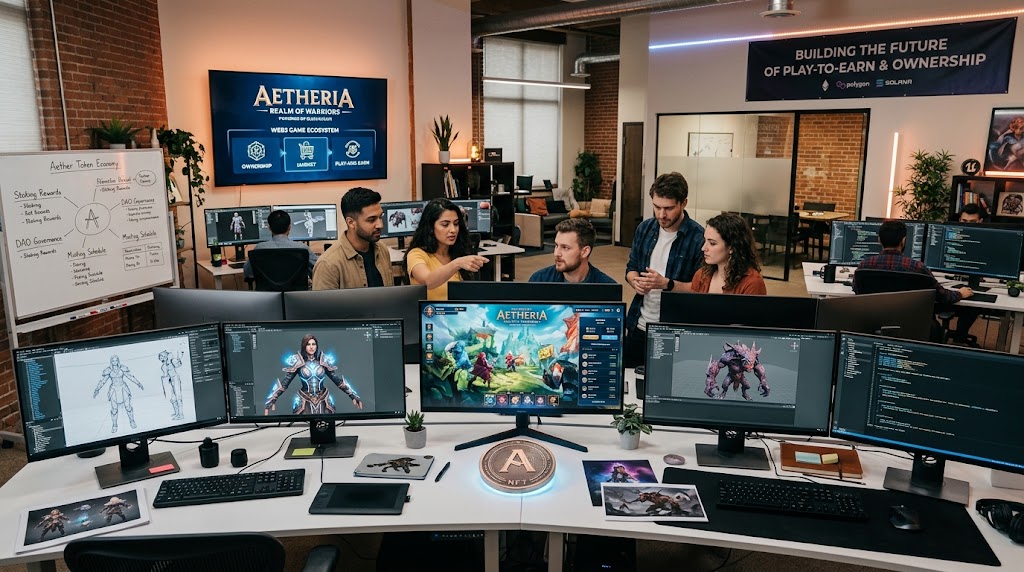
When you hire an external development team, you are getting more than just programmers. You are getting an entire cross-functional team trained in emerging decentralized tech.
Here is what a complete production team typically includes:
- Blockchain Developers: Experts in Solidity, Rust, or Move who write secure smart contracts for tokens and items.
- Game Engine Engineers: C# and C++ specialists who program physics, player controls, and graphics in Unity or Unreal Engine.
- UI/UX Designers: Specialists who craft intuitive interfaces that simplify wallet connections and token management.
- Economy Designers: Mathematicians and game balancers who build sustainable monetary systems and reward structures.
Without every single one of these roles working in sync, Web3 projects often stumble. A great smart contract is useless if the game itself is boring, and a fun game can fail overnight if its token economy crashes.
Essential Features of Successful NFT Games
What separates a viral Web3 title from a project that gets abandoned after a month? It usually comes down to core features that provide genuine value and long-term engagement for players.
True asset ownership is the foundation. Players must feel confident that their characters, land, and weapons belong to them on the blockchain. They should be able to transfer these assets out of the game or trade them on secondary marketplaces like OpenSea whenever they wish.
Interoperability is another exciting frontier. Leading NFT game development companies build items that can be used across multiple games or virtual metaverses. Imagine using a skin unlocked in an action shooter inside a virtual social lounge-that is the potential of true digital interoperability.
Here are key features every Web3 title should incorporate:
- Self-custodial wallet integration supporting multiple network ecosystems
- In-game peer-to-peer marketplaces with dynamic search filters
- Staking mechanisms that allow players to earn passive yields on idle assets
- Rental systems that let asset owners lend items to newer players for a share of rewards
- Decentralized Autonomous Organization (DAO) voting modules for community governance
Integrating these features smoothly requires deep technical expertise. NFT game development companies know how to handle these features without overwhelming players with technical jargon.
Frequently Asked Questions
What Are NFT Game Development Companies?
NFT game development companies are specialized studios that design, program, and launch blockchain-based video games. They handle everything from traditional game design and 3D graphics to smart contract coding, tokenomics, and Web3 wallet integration.
How Much Does It Cost to Hire NFT Game Development Companies?
Costs vary widely depending on project scope. A basic 2D Web3 game or card title might cost between $30,000 and $80,000. Full-scale 3D titles with complex tokenomics and custom marketplaces built by top NFT game development companies can range from $150,000 to over $500,000.
Which Blockchain Is Best for Web3 Game Development?
Polygon, Immutable X, and Solana are currently top choices for gaming. They offer low transaction fees and fast execution speeds, which are critical for high-volume in-game microtransactions compared to Ethereum’s mainnet.
How Long Does It Take to Build an NFT Game?
A simple prototype can take 2 to 3 months. However, building a polished multiplayer game with secure smart contracts, dynamic assets, and balanced tokenomics usually takes between 6 and 18 months of active production.
Can Traditional Games Be Converted Into NFT Games?
Yes. Existing games built on Unity or Unreal Engine can integrate Web3 features. Developers wrap existing game assets as non-fungible tokens and link player inventories to blockchain smart contracts using Web3 SDKs.
Why Is Tokenomics Important for Web3 Games?
Tokenomics determines how in-game currency and assets are generated, distributed, and spent. Without a balanced token economy, game inflation can collapse item values, driving players away from the platform.
How Do Smart Contract Audits Protect Blockchain Games?
Smart contract audits involve third-party cybersecurity experts inspecting code for vulnerabilities and loopholes. Audits prevent hackers from exploiting contracts to drain liquidity pools or illegally mint rare digital items.
Conclusion
Web3 gaming represents a major shift in how players interact with virtual worlds. By combining true ownership, decentralized economies, and immersive gameplay, blockchain technology is reshaping entertainment forever. Working with experienced NFT game development companies ensures that your vision becomes a secure, scalable, and engaging reality. From picking the right blockchain to balancing your token economy, the right technical partner makes all the difference in this fast-moving space.
Leave a Reply