



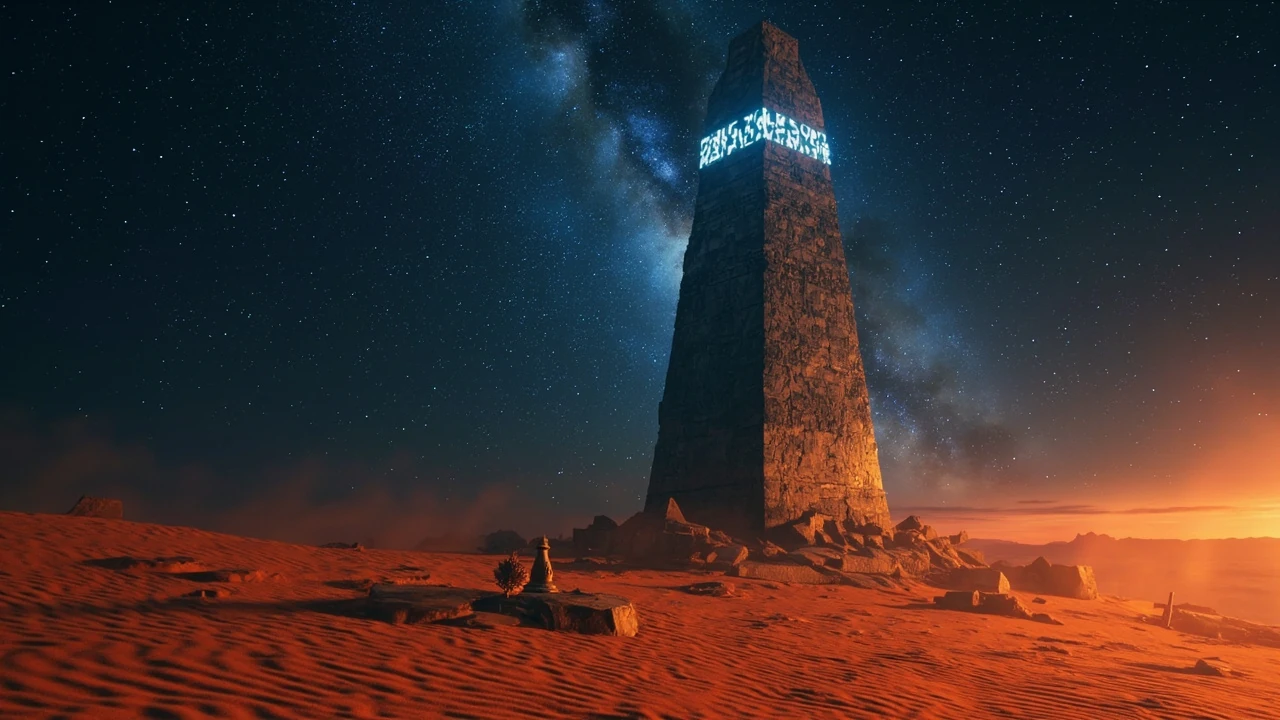

A late-game tower in an open-world action RPG can quietly reveal more about the studio’s design priorities than any developer interview. The Spire of the Stars in Crimson Desert is exactly that kind of structure: a tall, isolated monument on the world map that most players only reach after dozens of hours of travel, combat, and faction work. Once you do arrive, the tower is less a destination than a concentrated statement about how the team wants players to finish exploration, manage resource pressure, and read the world around them.
This guide walks through the tower as a quest destination, then steps back to read it as a piece of game design. You will find the confirmed location context, the quest chain that connects to the tower, the combat and traversal mechanics the spire asks you to use, and the design lessons the structure offers to developers and designers who study open-world pacing. The first body section below carries the full focus keyword exactly so search engines and readers both see the same topic the article is built around.
Spire of the Stars in Crimson Desert, the late-game tower explained
The Spire of the Stars is a tall, carved stone tower that appears on the world map in the northern highland region of Crimson Desert. It sits on a plateau above a river bend, visible from a wide radius thanks to its height and its pale stone color, which contrasts with the surrounding red sandstone. From a player perspective, the structure works as a navigation anchor: once you have seen it, you can orient against it from almost anywhere in the northern half of the map. From a design perspective, the spire is the studio’s clearest example of a “tall landmark as quest gate”, a structure that doubles as visual reference, content gate, and skill test in one object.
Most players will not bump into the Spire of the Stars by accident. Reaching the plateau requires solving a mid-game faction chain, clearing a small enemy camp, and crossing a broken bridge that has to be repaired through gathered materials. The cost of entry is intentional. The spire is a reward for players who have already invested time in the surrounding region, and the encounter design assumes you have a full party, a workable weapon set, and several prepared healing items.
Once inside, the spire is a linear climb broken into roughly twelve named chambers. Each chamber is built around one combat or traversal idea, and each one leaves a clue about the broader Crimson Desert encounter philosophy. The climb ends at a small circular chamber with an open roof, which is where the quest concludes and where the most interesting design questions begin.
Why the Spire sits where it sits on the world map
Open-world landmarks are rarely placed by accident. The Spire of the Stars is positioned at the intersection of three travel corridors and within line of sight of a major fast-travel point. That placement does three things at once.
- It gives returning players a visual reference they can use to plan a route before opening the full map.
- It rewards players who move through the world on foot or on horseback instead of relying on fast travel, because the spire reveals new information as you approach from different angles.
- It creates a natural “last landmark” the studio can use in cinematics, screenshots, and marketing without changing the world geometry.
The same principles show up in many large action RPGs, where late-game towers, lighthouses, or shrines double as both gameplay milestones and recognizable set pieces. Crimson Desert leans into that tradition, but with a heavier focus on physical distance and a slower ride-in than many of its peers.
How the Spire differs from the surrounding ruins
The northern highland region already contains several smaller ruins, watchtowers, and cave complexes. The Spire of the Stars is different because it is the only structure in the area that cannot be entered at low character level. Other ruins scale their enemies to the player, offer reduced rewards, or both. The spire instead enforces a hard requirement: the surrounding faction quest must be completed, and at least one specific camp must be cleared. That makes the spire feel like a deliberate endgame arena rather than a scaled-down reskin of an early-game dungeon.
For developers, the distinction is worth noting. Two structures can occupy the same art and engineering budget and still produce very different player experiences, depending on whether their access is gated by character level, by progress flags, by physical barriers, or by narrative state. The Spire of the Stars uses a mix of all four, and that mix is what makes the climb feel earned.
How to reach the Spire of the Stars in Crimson Desert
Reaching the Spire of the Stars is a small journey in itself. The tower is far enough from the opening region that a direct ride takes real time, and the route asks the player to clear a few smaller encounters on the way. Treat the trip as preparation, not as a commute, and the climb itself becomes much easier.
Prerequisites before you ride north
Before pointing your mount at the spire, work through these prerequisites in this order.
- Finish the mid-game faction chain that begins in the highland settlement. The chain introduces the local leader and unlocks a fast-travel point within a few minutes’ ride of the spire.
- Clear the river camp to the southwest of the spire plateau. The camp blocks the most direct path and is also the source of the quest item that opens the spire door.
- Repair the broken bridge to the north. The repair requires gathered timber and stone, and it stays repaired for the rest of the playthrough.
- Stock at least eight healing items, one stamina-restoring food, and one repair kit for your main weapon. The climb has no vendor inside.
- Bring a ranged weapon, even if your build is melee-focused. Two of the chambers are much easier with arrows or thrown gear.
These prerequisites are the same on a normal difficulty run, but the quantities scale up on harder settings. Players who skip the bridge repair will have to ride a long detour around the cliff edge, and that detour often costs more time than the repair itself.
The route north, and what to watch for
From the highland settlement fast-travel point, the route to the spire has four distinct legs, and each one teaches something about the surrounding region.
- Cross the shallow river and pass through the lower meadow. This stretch is open, which makes it a useful place to practice long-range combat against the local wildlife.
- Follow the cliff path to the river camp. The path is narrow and the camp uses elevation, so a careful approach with the bow is usually safer than a frontal charge.
- After the camp, take the repaired bridge across the north gorge. Once the bridge is in place, fast travel can route through this leg, which shortens every later visit.
- Climb the plateau trail to the Spire of the Stars. The trail is wide and switchbacked, and the spire entrance appears about three minutes before you actually reach the door, which gives you time to plan.
The route is not signposted in the modern way. The spire is meant to be discovered by sight, which is one reason the studio placed it on a tall plateau where it can be seen for a long time before arrival.
Quest chain tied to the Spire of the Stars
The Spire of the Stars is not a side activity. It is the conclusion of a multi-step quest chain that begins in the highland settlement and ends in the open roof of the tower. Understanding the chain is what turns the spire from a curiosity into a satisfying reward.
Stage 1: the highland commission
The chain begins when the local leader in the highland settlement asks the player to investigate a series of disturbances near the river. The first stage is mostly dialogue and short travel, but it sets up the central idea: something in the north is drawing attention, and the player is the one being asked to look at it. The stage ends with a marker on the river camp.
Stage 2: clearing the river camp
Clearing the camp is a real combat encounter, not a stealth option. The camp has roughly twelve enemies spread across three elevations, plus a small command tent. The tent holds the quest item, which is a carved stone disc. The disc is the literal key to the spire and also a readable lore object that explains why the spire was built.
Stage 3: the bridge repair
The bridge repair is the slowest stage in real time. The player has to gather timber and stone, which encourages a detour through the surrounding area. That detour is not wasted: the materials respawn, the gathering teaches the local resource system, and the repair itself remains a useful infrastructure upgrade for the rest of the playthrough.
Stage 4: entering the Spire of the Stars
With the camp cleared and the bridge repaired, the player can approach the spire. The carved disc fits into the door, and the climb begins. The climb is the longest stage in real time, because it is built from twelve chambers that each have their own logic.
Stage 5: the open roof
The final chamber is open to the sky. It contains a short scripted scene, a choice that affects the dialogue but not the main ending, and a small reward set. The reward set is interesting because it is not the strongest gear in the game. The studio chose to give a cosmetic and a small but permanent traversal upgrade instead, which keeps the spire from trivializing the late game.
The full quest chain is summarized in the table below.
| Stage | Trigger | Main activity | Average time | Failure case |
|---|---|---|---|---|
| 1. Highland commission | Settlement leader dialogue | Dialogue and short travel | 10-15 minutes | Leaving the region resets the marker |
| 2. River camp | Camp marker on map | Combat encounter across three elevations | 20-30 minutes | Death respawns at settlement |
| 3. Bridge repair | Camp cleared | Gathered material delivery | 25-40 minutes | Materials respawn in the same area |
| 4. Spire climb | Bridge repaired, disc equipped | Twelve chamber combat and traversal | 60-90 minutes | Mid-chamber checkpoints |
| 5. Open roof | Climb complete | Scripted scene, choice, reward set | 10-20 minutes | Choice does not block completion |
Average times are drawn from community reports and reflect normal difficulty on a level-appropriate character. Players who enter under-leveled can expect the climb to take noticeably longer, especially in chambers that mix enemy types.
Combat and traversal mechanics inside the spire
The spire’s interior is built around a small, deliberate toolkit. Each chamber takes one or two of those tools and forces the player to use them in a specific way. The result is a climb that feels varied without ever leaving the same basic rule set.
Chamber toolkit
Across the twelve chambers, the spire asks the player to use the same five mechanics in different combinations.
- Melee timing windows, with enemies that punish panic attacks and reward reading attack telegraphs.
- Ranged crowd control, especially in chambers with multiple elevated enemies.
- Stamina-aware climbing, on walls that drain stamina faster than the open world does.
- Environmental interaction, like kicking a stack of crates or pulling a lever mid-fight.
- Healing under pressure, with several chambers that add a secondary enemy wave right after the player uses a healing item.
The toolkit is small on purpose. A small toolkit that is used in varied combinations is more readable for players than a long toolkit that is used in shallow ways, and it makes the climb easier to teach in a guide like this one.
Chamber logic at a glance
Instead of walking through every chamber, it is more useful to group the twelve into four families. The table below shows the families, the mechanic each family focuses on, and a representative chamber that introduces that family.
| Chamber family | Main mechanic | Representative chamber | Common failure | Quick mitigation |
|---|---|---|---|---|
| Entry gauntlet | Melee timing windows | Chamber 2, narrow hall | Panic swinging | Block, step back, single counter |
| Vertical rooms | Stamina-aware climbing | Chamber 5, pillar room | Jumping off mid-climb | Wait for stamina regen, climb in short bursts |
| Crowd control | Ranged crowd control | Chamber 8, balcony ring | Running out of arrows | Prioritize ranged enemies first, then close in |
| Pressure tests | Healing under pressure | Chamber 11, twin arena | Healing too early | Stagger the heal until the first wave is small |
The chamber families are not officially labeled this way. They are a way of reading the climb so the climb is easier to plan. The spire also includes a small hidden shortcut that skips chamber 9, but it is gated by a platforming section that is easier to find on a second visit than on a first.
Why the climb scales so cleanly
The climb scales in two directions at once. Vertical complexity increases as the player moves higher, and enemy variety widens at the same time. That combination matters because it keeps the climb from feeling like the same fight repeated twelve times. The player is not just getting better at the game. The game is also asking the player to read a wider set of signals.
For developers, the spire is a useful case study in chamber-based encounter design. Each chamber is small, but the connection between chambers is what creates the climb. A player who understands chamber 2 will not necessarily understand chamber 8, because the dominant mechanic has changed. That is a healthy kind of difficulty curve, and it is one reason the climb is more memorable than a single long arena would be.
How the Spire of the Stars connects to the wider Crimson Desert world
The Spire of the Stars is not the only endgame structure in Crimson Desert, but it is the one that the world map keeps pointing at. The connection between the spire and the wider world is one of the more interesting design decisions in the game.
Visual storytelling on the plateau
From the plateau, the player can see several of the game’s other major landmarks: a distant fort, a broken aqueduct, and a smaller tower that glows at night. The view is not a screenshot moment. It is a piece of directional information. The studio is using the spire’s height to suggest where the rest of the late game lives, and then rewarding players who follow that suggestion with shorter routes and new dialogue.
Resource pressure and the wider economy
Inside the spire, there is no vendor and no crafting station. The climb has to be completed with the resources the player brought in. That decision puts real pressure on the surrounding economy, because players start treating the highland settlement as a logistics hub instead of a quest hub. They buy food, repair gear, and store materials before each climb, which feeds the local vendors and gives the highland a sense of activity that purely quest-based regions often lack.
The economy around the spire is one of the cleanest examples in the game of how a single late-game structure can reshape a region’s role without changing the region’s map geometry.
Connection to the Crimson Desert main story
The main story touches the spire in one scene near the end of the second act, and the dialogue references the climb even if the player has not done it. That small bit of cross-reference is important, because it makes the spire feel like part of the world instead of an isolated activity. Many large action RPGs handle this kind of cross-reference with a single dialogue line. Crimson Desert uses the dialogue, plus the visual connection from the plateau, plus the resource flow into the highland settlement, plus the late-game fast travel route through the repaired bridge.
For designers, the spire is a good example of how a single piece of content can carry at least four kinds of value at once: navigation, narrative, economy, and encounter design. Removing any one of those layers would still leave a working feature, but the climb would lose a lot of its texture.
Design lessons the Spire of the Stars offers game developers
Beyond its role as a quest destination, the spire is a useful object to study. It is small enough to read in a single sitting, but layered enough to reward a careful look. The lessons below are useful for developers, designers, and producers who work on open-world games at any scale.
Lesson 1: A landmark can be a quest gate without being a quest marker
The spire sits on the map, visible from a long distance, but it does not show a quest marker until the player is ready to use it. That distinction matters. A visible landmark gives the player orientation and a sense of place. A quest marker tells the player what to do next. The studio kept the spire on the visible layer and pushed the marker onto the quest layer, which lets the spire exist in the world before it exists in the journal.
For developers, the takeaway is that a single piece of content can serve the navigation system, the quest system, and the player’s mental model of the world at the same time, as long as the team is willing to think about each system separately.
Lesson 2: Late-game content can scale by variety, not by numbers
None of the spire’s chambers are unusually hard by raw numbers. The difficulty comes from the variety of mechanics and the way each chamber combines them. That choice keeps the climb accessible to a wider skill range than a pure stat-scaling climb would. Players who struggle with timing windows can lean on the ranged weapon, and players who struggle with crowd control can spend more time on the timing windows. The same climb reads differently to different players, which is one of the goals of good encounter design.
Lesson 3: Reward design can protect the late game
The spire’s reward is a small cosmetic and a permanent traversal upgrade, not the strongest weapon in the game. That decision protects the late game. If the spire had handed out the best weapon in the game, every other endgame activity would feel less rewarding. By keeping the spire’s reward modest in raw power, the studio kept the rest of the late-game economy intact.
Lesson 4: A small toolkit used well beats a large toolkit used shallowly
Five mechanics across twelve chambers is a small toolkit, and the spire uses it well. A larger toolkit would have required more animation work, more tutorial surface, and more risk of a single mechanic being underused. The small toolkit is also easier to teach in community guides, easier to QA, and easier to balance across difficulty settings.
Lesson 5: Content can be a logistics lesson
Because the spire has no vendor or crafting station, the climb becomes a logistics problem. The player has to plan, stock, and route. That small constraint is what turns the spire from a dungeon into a habit. Players who do the climb once will plan the next climb differently, and that planning is part of the late-game loop.
Tips for players approaching the Spire of the Stars for the first time
If you are a player about to ride north for the first time, the tips below are the ones the community keeps repeating. None of them are secrets, but together they make the climb much smoother.
- Do the bridge repair before the climb, even if it feels slow. The repair saves real time on every later visit, including the second climb if you want the other dialogue option.
- Bring a ranged weapon even if you never use it in the open world. Two of the spire’s chambers are built around it, and you cannot buy arrows inside.
- Do not waste your healing items in the first half of the climb. The later chambers assume you still have most of your stock.
- Use the balcony ring in chamber 8 as a pacing checkpoint. If you are running low on arrows by then, drop to the lower level and finish with melee, which is slower but more resource-light.
- Treat the open roof as a quiet scene, not as a fight. The choice on the roof is a dialogue choice, and the reward set is a small but useful upgrade. Plan your next move before you leave.
These tips are written for a first visit on normal difficulty. On harder settings, the chamber logic is the same, but the resource numbers and enemy aggression will be higher.
Where the Spire fits in the wider Crimson Desert endgame
The Spire of the Stars is one of several endgame anchors in Crimson Desert, but it has a particular relationship to the rest of the late game. It is the structure that most clearly says, “you are near the end of the region’s content”. The other endgame anchors feel more like end points. The spire feels more like a threshold.
Compared with the other late-game structures
The other endgame anchors in the region include a fortified keep, a flooded ruin, and a smaller watchtower that opens only at night. Each one has its own access chain and its own encounter design. The spire is the tallest, the most visible, and the most linear of the four. That makes the spire a good first endgame anchor for players who want a clear sense of completion, and a less interesting choice for players who prefer open-ended exploration.
| Late-game anchor | Access style | Combat focus | Reward weight | Best player type |
|---|---|---|---|---|
| Spire of the Stars | Quest-gated, linear | Mixed melee and ranged | Light, cosmetic plus traversal | Players who want a clear endpoint |
| Fortified keep | Faction-gated, branched | Heavy melee, siege tools | Medium, gear upgrade | Players who like faction play |
| Flooded ruin | Item-gated, multi-path | Stealth and underwater | Medium, lore set | Players who like exploration |
| Watchtower at night | Time-gated, short loop | Fast combat, small arena | Light, repeatable | Players who like short sessions |
The four anchors do not overlap heavily. A player who finishes the spire will still have meaningful content in the other three, which is the kind of late-game design that keeps a large action RPG feeling worth returning to.
Why the Spire is a good first endgame visit
For most players, the spire is the right first visit because it sets a clear expectation. You arrive, you climb, you finish, and you walk away with a small reward and a sense of completion. That rhythm is useful early in the endgame, because it teaches the player that the late game is still a series of contained experiences rather than one long grind. Once that expectation is set, the other anchors can be more open-ended without feeling like a sudden change in design.
Common questions players ask about the Spire of the Stars
The questions below are the ones the community asks most often. They are useful for first-time visitors, and they are also useful for developers and designers who want to know how the climb reads from the player’s side.
Is the Spire of the Stars a main story quest or a side activity?
It is a side activity, but it is referenced in the main story. A single scene in the second act mentions the spire by name, and the dialogue changes depending on whether the player has already done the climb. The climb itself is not required to finish the main story, but it is one of the more memorable optional pieces of content in the highland region.
What level should I be before I attempt the climb?
There is no hard level requirement, but the spire is tuned for a character that has already completed the mid-game faction chain and the river camp. Under-leveled players can still finish the climb, but the pressure tests in the later chambers will be much harder, and the lack of an in-tower vendor means resources will be tight.
Can I leave the spire and come back?
Yes. The spire has mid-chamber checkpoints, and you can fast travel out from those checkpoints and return to the same point. The only cost is that any in-progress resource pressure resets when you leave, so a fast exit is not free.
Does the choice on the open roof change the ending?
No. The choice on the open roof changes the dialogue and a small piece of local state in the highland settlement, but it does not change the main ending of Crimson Desert. The studio kept the choice meaningful inside the region without making it a global plot branch, which is a common late-game design pattern in large open-world RPGs.
What is the best build for the climb?
There is no single best build, because the spire rewards a mix of melee timing, ranged crowd control, and stamina-aware climbing. A build that leans entirely into one of those will struggle in at least one chamber family. The most consistent approach is a balanced build with a reliable melee weapon, a ranged weapon with enough arrows for two full encounters, and one piece of gear that boosts climbing stamina recovery.
Is the climb different on harder difficulties?
Yes, but the differences are mostly in numbers rather than mechanics. Enemy health and aggression go up, and the resource pressure tightens. The chamber logic and the rewards are the same. Players who understand the climb on normal difficulty can usually finish it on harder settings with a better-stocked loadout and more careful pacing.
Can I do the climb with a small party instead of solo?
Yes. The spire is balanced for a small party, and several of the crowd-control chambers are noticeably easier with a second player drawing aggro. The rewards are the same, and the dialogue at the top does not change based on party size. If you are playing in a group, the bridge repair is faster as well, because the gathering can be split.
Will the Spire of the Stars change in future updates?
As of the current build, the spire is a stable piece of content. Future updates could add cosmetics, repeatable runs, or new chamber variants, but the existing climb is unlikely to be reworked, because it is one of the studio’s reference points for late-game pacing. Any change to the spire would also affect the surrounding region’s economy, so even small changes are likely to be made carefully.
Frequently asked questions
What is the Spire of the Stars in Crimson Desert?
The Spire of the Stars is a tall, carved stone tower on a highland plateau in the northern part of the Crimson Desert world map. It is a late-game quest destination that combines navigation, a faction-based access chain, and a twelve-chamber climb that mixes melee combat, ranged combat, and stamina-aware traversal. It is also a reference point in the wider game world, visible from a long distance and tied into the local economy through the highland settlement.
How do I unlock the Spire of the Stars quest chain?
The chain starts with a dialogue in the highland settlement after the mid-game faction content is active. The leader offers a commission to investigate disturbances near the river, which leads to the river camp and then to the bridge repair. Once those two stages are done, the spire entrance opens and the climb becomes available.
Do I need to clear the river camp to enter the spire?
Yes. The river camp is the source of the carved stone disc that opens the spire door, and it is also a meaningful combat encounter on its own. Without the disc, the door does not open, and there is no alternate access route into the spire in the current build.
How long does the Spire of the Stars take to clear?
On normal difficulty with a level-appropriate character, the climb takes roughly 60 to 90 minutes of active play, with another 25 to 40 minutes for the bridge repair and 20 to 30 minutes for the river camp. First-time players should plan for around two hours of total activity, including the approach ride.
What is the reward for finishing the Spire of the Stars climb?
The reward is a small cosmetic set, a permanent traversal upgrade that helps with highland movement, and a piece of local reputation that opens a new dialogue option in the highland settlement. The spire does not drop the strongest weapons or armor in the game, which keeps the rest of the late-game economy intact.
Is the Spire of the Stars worth doing on a second playthrough?
Yes, especially for players who want the other dialogue option on the open roof or who want to test a different build against the climb. The mechanics are the same, but a second visit with a better-stocked loadout is a useful way to measure how much your build has changed. The bridge also stays repaired across the playthrough, which shortens the approach.
Does the Spire of the Stars connect to other endgame content?
It does in several small ways. The view from the plateau points toward the fortified keep and the flooded ruin, which are two other late-game anchors in the region. The highland settlement becomes a logistics hub because of the spire’s no-vendor policy, and that hub activity touches several other side quests. The main story also references the spire in one scene near the end of the second act.
What should I bring into the Spire of the Stars?
Bring at least eight healing items, one stamina-restoring food, one repair kit for your main weapon, and enough arrows or thrown gear for two full encounters. A ranged weapon is strongly recommended even for melee-focused builds, because two of the twelve chambers are much easier with ranged crowd control. There is no vendor or crafting station inside the spire, so the climb has to be completed with the resources you bring in.
Leave a Reply