



3D Animation Studio Capabilities and Creative Production Pipelines
Every dynamic brand visual starts with a spark of imagination. Bringing complex concepts into concrete focus takes clarity, precision, and technical skill. Partnering with a skilled 3d animation studio allows businesses to translate flat ideas into living digital experiences.
Static visuals struggle to grab attention today. Audiences scroll past basic images in seconds. Dynamic dimensional graphics capture gaze, spark curiosity, and convey messaging instantly.
Working with a dedicated 3d animation studio helps bridge the gap between creative vision and technical execution. From initial concepts to rendered frames, modern production studios blend artistic storytelling with cutting-edge software workflows.
Whether you need product demos, broadcast commercials, or immersive architectural walkthroughs, understanding how digital artists operate helps you maximize your investment. Let us explore how custom graphics come together.
What a Professional 3D Animation Studio Offers for Modern Brands
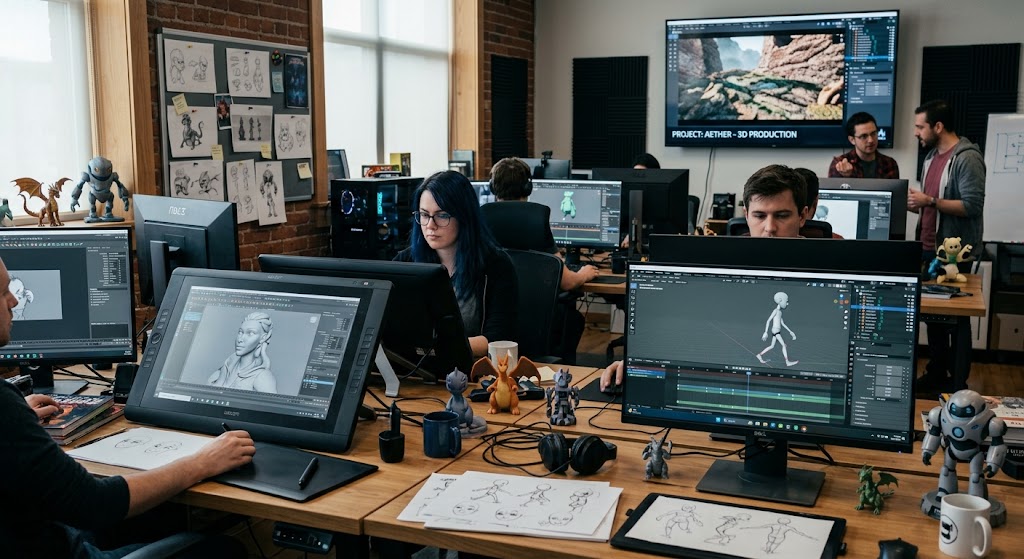
A full-service 3d animation studio brings together talent across multiple disciplines. Visual storytellers, sculptors, lighting experts, and motion artists work together under one creative roof. Each brings distinct skills to build seamless visual assets.
Think about the sheer amount of work behind a single ten-second visual clip. Artists model every surface, define material reflections, setup virtual lighting, and sequence every tiny movement frame by frame. It is meticulous work.
Here is what you gain when collaborating with a specialized team:
- Custom character development and organic asset modeling.
- Photorealistic product visualization and exploded feature views.
- High-impact motion graphics for broadcast and digital marketing campaigns.
- Architectural visual renderings and spatial walkthroughs.
- Rigging, mechanical setup, and complex physics simulations.
Visual assets created by a custom 3d animation studio give marketers total creative freedom. Real-world filming limitations vanish completely. You can fly cameras through microscopic gear assemblies, show internal fluid movement, or construct imaginary landscapes without physical limits.
Look at how top brands present complex machinery or medical devices. They rarely use camera footage alone. Instead, clean three-dimensional graphics highlight features, isolate components, and display functionality seamlessly.
The visual impact remains undeniable. Clear renderings reduce viewer friction and build instant consumer trust.
Core Production Stages Inside a 3D Animation Studio
Every successful project follows a structured workflow. Without a solid process, technical rendering projects can easily fall into scope creep or delayed revisions. A seasoned 3d animation studio establishes clear milestones early on.
The pipeline usually breaks down into pre-production, core asset creation, animation, and post-production. Here is how these phases compare in effort, deliverables, and focus areas:
| Production Phase | Primary Deliverables | Key Focus Areas | Typical Timeline Share |
|---|---|---|---|
| Pre-Production | Scripts, storyboards, style frames, mood boards | Concept development, visual direction, project roadmap | 20% |
| Asset Creation | 3D models, textures, materials, character rigs | Geometry construction, surface detail, structural setup | 30% |
| Animation & Simulation | Keyframed motion, dynamic particle effects, lighting setup | Timing, weight, fluid dynamics, camera movement | 30% |
| Rendering & Compositing | Final rendered frames, color grading, sound design | Visual polish, noise reduction, output formatting | 20% |
Pre-production lays the foundation. Writing clear scripts and drawing preliminary storyboards ensures everyone agrees on the story before complex digital modeling begins. Making changes at the sketch phase saves huge amounts of time later.
Next comes asset creation. Digital sculptors build three-dimensional geometry, wrapping surfaces with realistic textures and material properties. Rough wood looks textured, metal reflects ambient lights, and glass bends incoming light rays accurately.
Then comes the actual movement stage. Animators apply movement through keyframing or physics engines. They tweak motion curves to give assets weight, momentum, and realistic physical presence.
Finally, render engines calculate billions of light bounces across all surfaces. Compositors compile raw render passes, adjust colors, add ambient glow, and sync final sound tracks.
This disciplined process keeps creative teams on track and guarantees consistent quality.
Selecting the Right 3D Animation Studio for Your Project Needs
Choosing a reliable creative partner requires looking beyond flashy demo reels. Portfolio clips display final output, but they do not reveal project management rigor, communication quality, or technical adaptability.
You need a creative partner capable of understanding your specific commercial objectives. A skilled 3d animation studio acts as a strategic collaborator rather than just an external service provider.
When evaluating prospective production partners, keep these crucial factors in mind:
- Industry-specific experience in your target market niche.
- Clear communication habits and structured feedback schedules.
- Transparent asset ownership rights and delivery files.
- Proven capability in meeting strict production deadlines.
- Scalable infrastructure to handle heavy rendering demands.
Different production houses specialize in different visual aesthetics. Some excel in hyper-realistic product visualization. Others focus on stylized cartoon characters or technical engineering illustrations. Aligning your aesthetic vision with the studio’s core strengths ensures better outcomes.
Ask prospective studios about their internal review workflows. Do they provide interactive 3D previews? How do they handle revision cycles? Clear answers to these questions prevent misunderstandings mid-project.
It pays to discuss technical formats early. Knowing where your final video will live-on social channels, widescreen event displays, or interactive websites-helps the 3d animation studio optimize camera angles and aspect ratios from day one.
Here is a comparison of common render engine technologies used across modern animation pipelines:
| Render Engine Category | Best Use Cases | Key Advantages | Primary Trade-offs |
|---|---|---|---|
| Offline Path Tracing | Commercials, cinematic films, high-end product renders | Unmatched photorealism, accurate global illumination | Long render times per frame |
| Real-Time Engines | Interactive apps, virtual sets, rapid content creation | Instant feedback, interactive camera control | Slight compromise on hyper-detailed caustics |
| Hybrid Render Systems | Broadcast graphics, architectural visualization | Balanced speed with realistic material shading | Requires high-end multi-GPU infrastructure |
Understanding these software capabilities allows you to make informed decisions about turnaround times and production budgets.
A reliable production studio will guide you toward the right technical solution based on your budget, timeline, and distribution channels.
Investing in top-tier visual production directly elevates your brand perception. High-quality motion graphics demonstrate professionalism, capture viewer attention, and clearly communicate value propositions.
Here are several practical steps to prepare before reaching out to your chosen production partner:
- Draft a brief outlining your target audience and core key takeaway.
- Gather existing CAD models, visual brand guidelines, or reference imagery.
- Determine your target video length and preferred delivery aspect ratios.
- Establish a realistic budget range and hard completion deadlines.
- Identify key decision-makers who will approve milestone stages.
Solid preparation leads directly to smoother production runs and faster project turnaround.
Frequently Asked Questions
What Services Does a 3D Animation Studio Provide?
A professional production team provides end-to-end visual content creation services. This includes storyboarding, scriptwriting, 3D modeling, texturing, character rigging, motion animation, lighting, rendering, visual effects, compositing, and final audio integration for commercials, product launches, corporate presentations, and entertainment projects.
How Long Does a 3D Animation Project Typically Take?
Production timelines vary widely depending on complexity, length, and visual detail. A standard 60-second product animation usually takes between 4 to 8 weeks from initial concept approval to final render. Highly detailed character animations or multi-minute technical videos may require longer schedules.
How Much Does Hiring a 3D Animation Studio Cost?
Project pricing depends on several factors, including visual complexity, asset detail, total duration, frame rate, and required turnaround speed. Simple product visualizations generally start at lower price points, while photorealistic visual effects or complex character animation projects require larger investments due to intensive labor hours.
What Assets Do I Need to Provide Before Starting?
Clients usually supply product CAD files, high-resolution logos, brand style guidelines, script outlines, and visual reference samples. If you lack pre-existing assets or CAD files, the production studio can model products from physical samples or photos.
What Is the Difference Between 2D and 3D Animation?
Two-dimensional motion graphics deal with flat art created on X and Y axes, making them ideal for infographics and simple vector explainer videos. Three-dimensional graphics add depth along the Z axis, allowing realistic light simulation, camera movement, object rotations, and photorealistic material rendering.
Can CAD Files Be Used in 3D Production Workflows?
Yes, production teams frequently convert existing engineering CAD files into optimized polygonal models suitable for rendering. This speeds up asset creation for industrial, automotive, medical, and consumer technology products while maintaining exact manufacturing dimensions.
How Do Revisions Work During the Animation Process?
Revisions are integrated at specific production milestones to maintain efficiency. Clients review storyboards, 3D clay models, material previews, and low-resolution animation passes for approval before final high-resolution rendering, ensuring the final output matches client expectations.
Collaborating with an experienced 3d animation studio allows you to transform abstract concepts into striking visual media. By choosing the right creative partner, establishing clear project goals, and following a structured production workflow, your brand can deliver memorable visual experiences that engage audiences and drive real commercial results.
Leave a Reply