



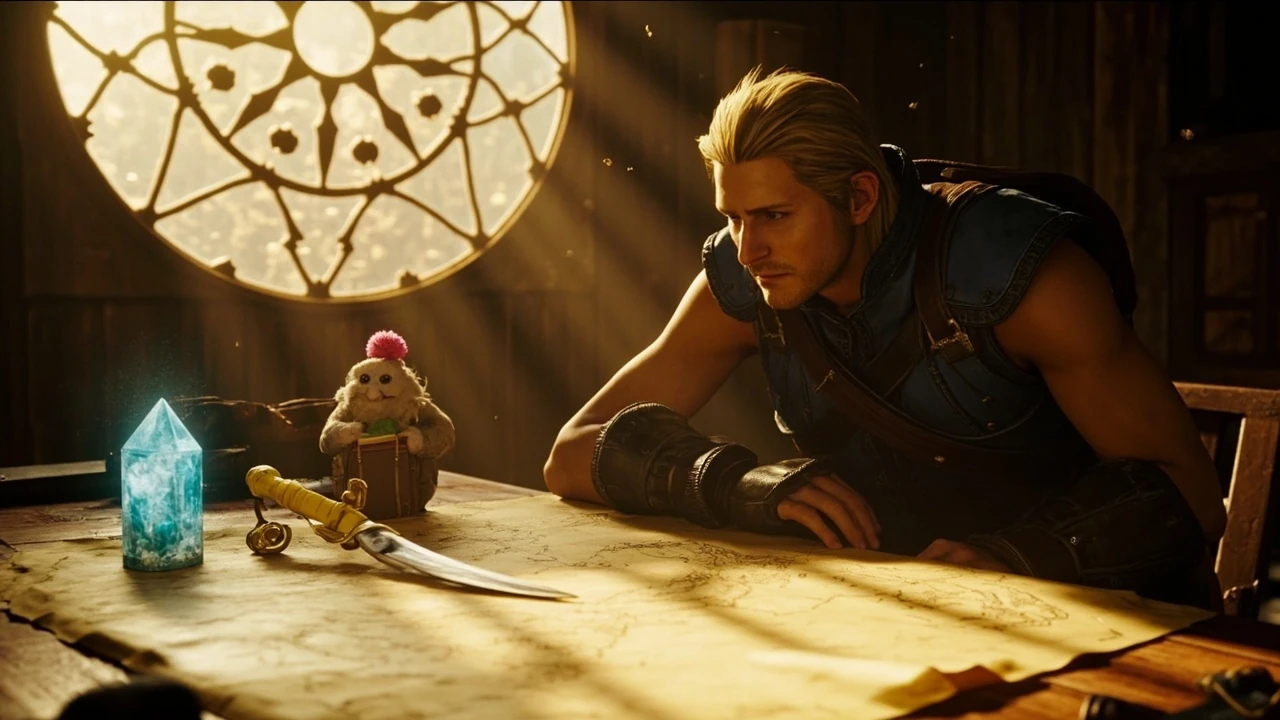

A complete FF9 walkthrough has to do two things at once. It has to guide a player through Final Fantasy IX disc by disc, flagging the points where a wrong choice locks out content, and it has to explain the production and design decisions that make the game worth studying in 2026. This article does both. The first half is a practical, no-fluff route through the story and its boss fights, with the same guidance a returning player would want before a fresh playthrough. The second half zooms out and looks at how Square’s team in the late 1990s packed a dense, character-driven JRPG onto four discs and what modern developers can still learn from the result.
Final Fantasy IX was released in 2000 for the original PlayStation and has since been remastered for modern platforms, but the core design has not changed. The route below is written for the original structure, so it works for any version that keeps the same act breaks. Specific numbers for HP, gil, and ability costs are written as planning values rather than exact stats, because the remaster has been rebalanced across releases. Where a value matters for a decision, the section explains the reasoning so you can re-check it against your in-game state.
FF9 walkthrough: how to use this guide
This FF9 walkthrough is organized by disc rather than by world map, because that is the unit the developers used when they cut content and laid out save data. Each disc has its own act break, its own visual identity, and its own design lesson. Reading the guide in order will let you see where the game hides a minigame you only get one chance to play, where a boss is designed to teach you a system that the next disc will rely on, and where a side quest is actually a pacing tool dressed up as optional content.
If you are playing for the first time, follow the route in order and save before any major branch. If you are returning and only need the parts you missed, the section headings in each disc point to the major decisions. The mini-guides for Tetra Master, the Chocobo Hot and Cold side quest, and the friendly side content in disc 3 and disc 4 sit at the end so they do not interrupt the main route.
Disc 1: Alexandria, Evil Forest, and the first design lesson
Disc 1 opens in Alexandria during a play that is interrupted by Queen Brahne’s airship attack on the kingdom of Lindblum. The narrative beat is simple: Zidane is a thief, Garnet is a princess who wants out, and the first half of the disc teaches the player how to use Active Time Battle 2.0, the ability system, and the trance gauge without ever calling it a tutorial.
Alexandria to the Evil Forest
The opening sequence is largely scripted, so the only real decisions are equipment checks. Make sure Steiner, Vivi, and Zidane all have the best weapons and armor available in the market. Spend gil on armor first, because early boss damage is front-loaded and the game gives you almost no opportunity to grind before the Evil Forest mini-boss. When you reach the Evil Forest, follow the linear path until the first battle with a Black Waltz. This fight is intentionally winnable with basic attack commands and a couple of potions, and its purpose is to teach the player that the new trance system charges passively during a long fight.
Evil Forest to Ice Cavern
After the forest, the party returns to Alexandria and the play sequence repeats. This is a design choice worth noting: the developers reused the same stage direction twice in a single disc to anchor the player in the world. When the princess runs into the forest again, the Ice Cavern is reached through a long, branching dungeon. The cavern is the first real test of the equipment system because enemies here resist physical damage and exploit weak magic defenses. Equip Stona, Shell, and at least one set of armor with ice resistance before entering.
Inside the Ice Cavern, save the three magicite stones for later. The game does not force you to use them right away, and choosing the wrong one is a soft lock that affects which skills your characters learn first. The stones are:
- Ore, which teaches Steiner how to use sword magic;
- Reed Pipe, which unlocks Vivi’s Black Magic skills early;
- Stone, which is mostly a placeholder but is required to complete the dungeon geometry.
Disc 1 boss strategy: Black Waltz 3
Black Waltz 3 is the first real boss and the first meaningful design lesson. The fight is split into two phases and uses the same boss art as the earlier Waltz encounters, which is a deliberate signal that the game wants you to recognize patterns rather than memorize attacks. The trick is to remove one of the Waltz units quickly with a focused attack string, then keep Zidane in the back row to reduce incoming damage while the front line finishes the second unit. If you entered the fight below 70 percent HP, the second phase will likely wipe you. Use a tent before the boss room so the field HP bonus carries into the fight.
Disc 2: Lindblum, the South Gate, and system mastery
Disc 2 moves the party into Lindblum, a hub city that the developers used to introduce almost every supporting system in the game. This is also the disc where the cast balloons from four to eight, and where the production team’s budget starts to show in the detailed interiors of the castle, the city, and the industrial quarter. If you only have a couple of hours, this is the disc to play carefully because it locks the most optional content behind timed events.
Lindblum and the welcoming events
When you enter the city, the game opens up in a way that is rare for JRPGs of that era. Most of the buildings are interactive, several NPCs rotate through dialogue, and at least three side activities are available within the first hour:
- Visit the synthesis shop to learn how to combine items, because it unlocks the only reliable way to build a high-tier weapon in disc 3.
- Play at least one round of Tetra Master against a named NPC, because the card game gives an experience reward that the developers tuned to feel generous on a first encounter.
- Trigger the friendly side content with the theater troupe, because it is one of two places in the entire game where you can get a permanent stat boost from a side quest.
Lindblum to the South Gate
The South Gate sequence is the first long travel segment in the game. The developers broke the overworld into a world map and a separate ship interface, and the South Gate is the first place where the player has to make a real route choice. The shorter path leads to a direct confrontation with a small fleet, while the longer path adds a stop at a port town that contains a chocobo side quest. For a first playthrough, take the longer path. The chocobo unlocks the entire Chocobo Hot and Cold mechanic that returns on disc 3 and disc 4, and skipping it is the single most common regret in retrospective walkthroughs.
Disc 2 boss strategy: Lani and the fleet
The fleet fight is technically a sequence of small encounters rather than a single boss, but it is the first time the game uses the new Active Time Battle 2.0 to teach the player about multi-target spells and area-of-effect abilities. The fastest way through the fight is to put Vivi on a back-row position and use his Black Magic to hit multiple targets, then have Steiner or Zidane clean up stragglers with physical attacks. The designers tuned this sequence so that ignoring the magic side of the encounter will almost always end in a wipe, which is exactly the lesson they want the player to learn before the boss fights later in the disc.
Disc 3: Terra, Bran Bal, and the design pivot
Disc 3 is the most discussed segment in any FF9 walkthrough because it is the structural pivot of the game. The party splits up, the genre shifts from a classic JRPG into a slower, more investigative story, and the developers used a quiet hub area to reset the player’s expectations. The disc is also the one most often criticized for its slower pace, which is a useful design case study in its own right. A modern studio can learn from the way Square gave the player a new movement ability, a new town, and a new motivation all in the same hour of play.
Terra and the branching routes
When the party arrives in Terra, the world map is replaced by a small cluster of connected zones, and the player has to choose where to go first. There is no single right answer, because each route unlocks a different system. The four core routes are:
- Madain Sari, which is the village of summoners and the place where the player learns how to use eidolons in a new way.
- Pinnacle Rocks, which contains the only minigame in the disc and is a soft tutorial for a stealth segment that returns later.
- Desert Palace, which is a dungeon that introduces the unique boss pattern the disc is built around.
- Esto Gaza, which is a port town with a small side quest that unlocks an end-game weapon.
The recommended order for a first playthrough is Madain Sari first, then Esto Gaza, then Pinnacle Rocks, then Desert Palace. This order lines up with the story pacing and lets the player meet Garnet’s mother in a way that matches the script’s intended emotional beat.
Disc 3 boss strategy: Ark and the laboratory
The laboratory on disc 3 is one of the most ambitious boss designs in the game, because the developers built a multi-phase fight around a theme of memory and identity. The boss has three phases, and the player can cut each phase short with a different ability. A focused run uses Vivi’s high-tier Black Magic in phase one, Zidane’s Thievery in phase two, and a summon in phase three. Skipping the last phase with a timed summon is the intended path, and the developers built the encounter so that the most efficient clear also happens to be the one that tells the cleanest story beat.
Disc 4: Memoria and the final act
Disc 4 is a single, very long dungeon that runs from the world map to the final boss. The developers made the unusual choice of stripping out the overworld and most of the side content so that the player experiences the climax as a continuous sequence. The dungeon is broken into themed sections that mirror each of the previous three discs, which is a callback the developers set up in disc 1 with a single line of dialogue that most players miss on a first run.
Memoria layout and shortcuts
Memoria is a long corridor with branches, and the fastest path is to ignore the side branches until you have cleared the central route. The side branches contain bonus content, a super boss, and the final synthesis recipes, so they are worth a second pass. Save at every crystal, because the developers built the save system to act as a checkpoint and because the disc does not let you return to a town once the final sequence starts.
Disc 4 boss strategy: Necron
Necron is the final boss of the original release, and it is designed as a stress test for every system the player has learned up to that point. The fight is split into five phases, and the design team tuned each phase around a different party member’s specialty. The intended clear is to keep the party near full HP through phases one to three, use the eidolons in phase four, and finish the fight with a focused physical attack in phase five. The single biggest mistake players make is saving their high-cost abilities for the end. The developers wanted the player to burn through resources early, because the final phase is intentionally easier than phase four. That is a small but important design lesson about resource pacing, and it is one of the reasons the fight still feels satisfying more than two decades later.
Side content, mini-games, and the design intent behind them
Most FF9 walkthrough guides treat the side content as a separate layer, but in the original design it is part of the main progression. The developers built three side systems that feed back into the main game: Tetra Master, the Chococo Cool and Hot side quest, and the friendly NPC quests that appear in every major town. Each one was tuned to give the player a specific reward at a specific time, and skipping them usually means losing an ability or a weapon that the final act assumes you have.
Tetra Master
Tetra Master is the card game, and it is the only side system in the game that the developers openly described as a tutorial for a separate design idea: managing randomness in a turn-based game. Every card has a random rank and arrow layout when you collect it, and the game rewards you for playing matches in every new town, not for winning them. The reward is an experience bonus to the active character, and the developers tuned it so that the first few matches in each town give more XP than later matches, which encourages exploration. A reasonable rule is to play three matches in each new town and stop, because the rest of the system is closer to a casino than a skill test.
Chocobo Hot and Cold
Chocobo Hot and Cold is the most important side quest in the game. It is the only way to unlock the end-game super boss, and it is also the side system that teaches the player how to manage a slow, deliberate minigame. The trick is to use the in-game hints about the chocobo’s reactions, because the developers built the system around feedback rather than RNG. A patient run will usually clear the quest in roughly an hour.
Friendly NPCs and timed events
Every major town has a small side quest that is only available within a window. The developers did not flag these in the original release, and the modern remaster does not flag them either, so a first-time player almost always misses at least one. The list of the most important ones is:
| Town | Side quest | Reward | Window |
|---|---|---|---|
| Alexandria | Find the lost kitten | Small gil and a Bronze Vest | Disc 1 only |
| Lindblum | Talk to the theater troupe | Permanent HP boost for Steiner | First visit only |
| Treno | Auction house side quest | Rare accessories and a unique weapon | Disc 2 onward |
| Madain Sari | Summoner’s side quest | Summon upgrade | Disc 3 only |
Production and design lessons from the FF9 walkthrough
For a studio lead or technical artist, the most useful part of any FF9 walkthrough is what it reveals about how the original team made trade-offs. Final Fantasy IX is a four-disc PlayStation game that shipped with a long script, eight playable characters, a fully modeled world map, and a card game that plays like a separate title. The production decisions that made that possible still read clearly in the final game, and they are worth mapping to a modern production.
How Square built a four-disc game on a single read-only medium
The original PlayStation used CD-ROMs with about 660 MB of usable space per disc, and the developers chose to split the game by narrative act rather than by asset type. That choice let the team keep the cinematic data for disc 4 on a single disc while reserving room on disc 1 and disc 2 for the most-played town and dungeon assets. The advantage is faster load times on the most replayed content, which is exactly where the player spends the most cumulative seconds. The trade-off is that disc 3 and disc 4 have to load from a fresh disc whenever the player changes a major area, which the developers tried to disguise by limiting fast travel on those discs.
For a modern studio, the lesson is that the cut of the build should follow the player’s real attention, not the asset’s size. A two-hour act that is replayed five times in a single playthrough should sit on a small, fast-loading slice of the build. A one-hour climax that is played only once can sit on a slower slice without affecting the experience.
Why the ability system is a pacing tool, not a progression system
Final Fantasy IX’s ability system is often described as a job system, but it is closer to a pacing tool. The player learns abilities by equipping a piece of equipment, using it a number of times, and then keeping the ability when the equipment is removed. The system is tuned so that the player unlocks roughly one new ability per hour of play, which is the rate at which the developers wanted the player to learn the game’s combat vocabulary. Skipping the system entirely, by grinding an ability in one area, breaks that pacing and is one reason the developers added a small XP penalty for over-leveling.
For a designer, the lesson is that a progression system can be a story. The pace at which the player unlocks new tools should match the pace at which the game wants the player to learn new strategies. A system that unlocks abilities too fast will feel empty, and a system that unlocks them too slowly will feel grindy. The developers used the equipment system to hide that pacing inside a familiar loop, and the player never noticed.
Why the cast grew from four to eight, and what it cost
Disc 2 introduces six more characters over a very short window, and the developers had to make a series of trade-offs to make that work. The new characters each have a small, focused ability set instead of a full job, the world map is split into a small number of named routes, and the side content is shortened. The result is a cast that feels distinct, but a second half that is shorter than the first. For a modern designer, the trade-off is similar to building a roguelike with a large cast: you can have depth or you can have breadth, and you cannot have both in a fixed budget. The team at Square made the call that breadth was more important for the story they wanted to tell, and the result is a cast that is still discussed today.
Why the final boss is a five-phase fight
Necron is a five-phase fight by design, not by accident. The developers wanted the player to feel the weight of every system the game had taught them, and they wanted the final encounter to be a test rather than a reward. The pacing is deliberate: the first two phases teach the player that they should spend resources, the third and fourth phases reward players who spent them wisely, and the final phase is short enough that a player who ran out of resources still has a chance. For a designer, the lesson is that a long fight is a pacing tool, and the length should match the number of distinct strategies the player has been taught.
Common failure modes in an FF9 playthrough
Most failed runs in a first playthrough come from a small number of decisions. Listing them out is more useful than restating the route, because the same decisions apply to a modern remake or a rerelease.
| Failure | What it looks like in play | How to avoid it |
|---|---|---|
| Under-leveled Zidane at the Evil Forest | First real boss wipes the party in two rounds. | Buy a tent in Alexandria and use it before the boss room. |
| Missed Chocobo side quest | End-game super boss becomes unbeatable. | Take the long route in disc 2 and use the hints at the port. |
| Wrong magicite in Ice Cavern | Character progression is locked for two discs. | Pick Ore or Reed Pipe, not Stone, on a first run. |
| Skipped synthesis in Lindblum | End-game weapons are missing. | Visit the synthesis shop on the first visit to Lindblum. |
| Used high-cost abilities too early | Necron wipes the party in phase four. | Save summons for the fourth phase of Necron, not earlier. |
Frequently asked questions
How long is the FF9 main story?
The main story takes about forty hours on a first playthrough with light side content, and roughly fifty-five hours if you do the timed NPC quests, the synthesis grind, and the Chocobo side quest. The disc structure is not a clean hour-by-hour split, because the developers front-loaded the cast in disc 2 and front-loaded the systems in disc 1.
Do I need to play the card game to finish the game?
You do not need to win matches to finish the game, but you should play at least three matches in each new town to pick up the experience bonus. The bonus is small, but it is one of the cleanest ways to keep the cast at the level the developers tuned the encounters for. A patient player can finish the card game in about five hours, and a player who only plays the required matches will get most of the value in two hours.
What is the single most common missable in FF9?
The most common missable is the friendly NPC side content in the towns, because the developers did not flag the windows in the original release and the remaster does not flag them either. The single biggest regret in retrospective walkthroughs is missing the Lindblum theater troupe quest, because the reward is a permanent HP boost for Steiner that the final boss assumes the player has.
Is the remaster different from the original release?
Yes. The remaster changes the art, the audio, and a small number of balance values. The route in this FF9 walkthrough is written for the original structure, so it works for both versions, but specific numbers for HP and damage should be re-checked against the version you are playing. The remaster is the right version for a first playthrough, because the art is the closest the team ever got to the original vision.
Can I finish the game without doing the synthesis system?
You can finish the main story without synthesis, but you will have a noticeably harder time against the final boss and the optional super boss. The synthesis shop in Lindblum is the cleanest way to build a high-tier weapon, and the developers tuned the encounter numbers to assume the player has at least one synthesized weapon by disc 4.
How do I unlock the Chocobo side quest?
The Chocobo side quest unlocks on the longer route through the South Gate on disc 2. Take the longer path, save at the port town, and use the chocobo’s reactions rather than a brute-force search. The developers built the system around feedback, so a patient run will clear the quest in roughly an hour, while a fast run can take three times that long.
Should I use the eidolons in the final fight?
Yes, and you should save them for the fourth phase. The developers tuned the encounter so that the first two phases are about resource management, the third phase is about reading the new attack pattern, the fourth phase is where summons and high-cost abilities are most useful, and the final phase is short enough that you can clear it without them. Skipping the summons is the single most common reason a run fails at the end of the game.
Is FF9 a good case study for a modern JRPG project?
Yes. The game is a useful case study because it shipped with a dense script, a wide cast, a card game, and a multi-phase final boss on a budget that would be considered small by modern standards. The team’s choices about disc cutting, ability pacing, and side content are still relevant, and they map cleanly to a modern production that has to balance scope, schedule, and a fixed storage budget. The most useful lesson is that a small number of well-paced systems can carry a long game, and that the order in which the player meets those systems is more important than the systems themselves.
Leave a Reply